In 2021, 354 startups reached unicorn status i.e. a $1 billion-plus valuation. By early 2025, only six of them had made it to an IPO. That gap between “billion-dollar valuation” and “actual business that survives” is the entire argument behind the camel startup, the idea HASAN.VC explores within their debut episode of their podcast Camels vs Unicorns.
What is a “camel startup,” and how is it different from a unicorn?
A unicorn is a privately held startup valued at $1 billion or more – a title about valuation, not viability. The camel startup is the opposite framing: a business built to survive first and scale second, on real revenue rather than a growth-at-all-costs valuation story.
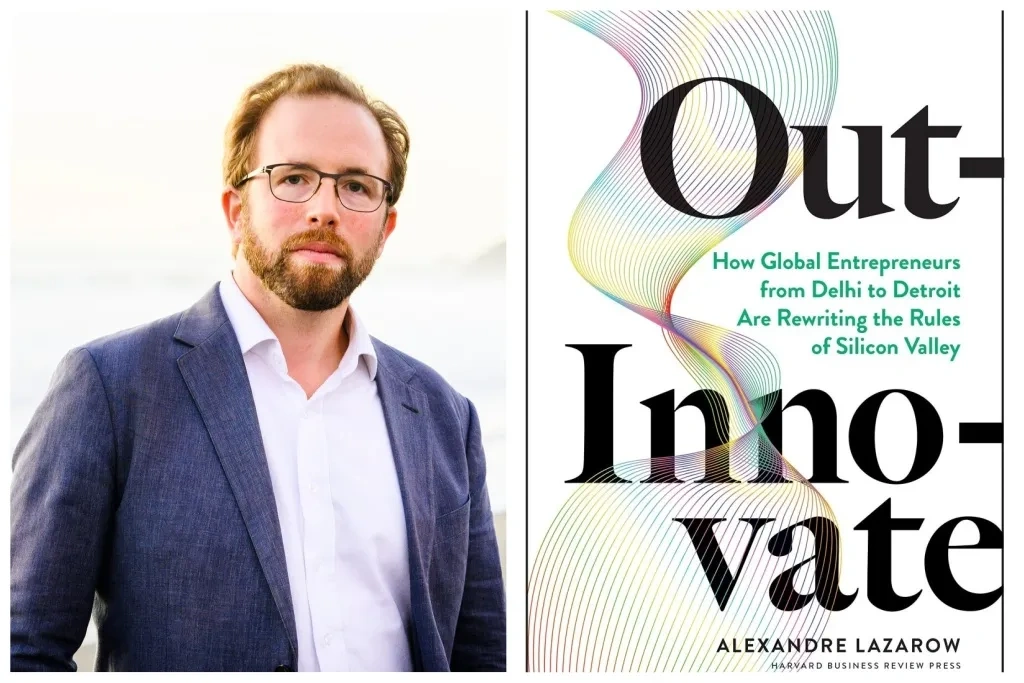
The term was coined by venture capitalist Alex Lazarow and popularized in his 2020 Harvard Business Review article and his book Out-Innovate. While HASAN.VC didn’t coin it, it built the idea into the core of its own investment thesis.
The distinction shows up clearly side by side:
| Unicorn | Camel | |
| Growth model | Growth at all costs, funded by heavy cash burn | Steady, revenue-first growth |
| Capital use | Depends on continuous fundraising to keep scaling | Built to run lean and survive on less |
| What “success” means | Hitting a $1 billion valuation | Real revenue, staying power, healthy growth |
| Best suited to | Fast-growing, deep capital markets | Volatile, resource-constrained markets |
How often do unicorn startups actually fail after hitting a $1 billion valuation?
More often than the headlines suggest. Research by DCVC partner Ali Tamaseb, published in his book Super Founders, found that about 17% of unicorns ultimately fail outright – not stall, not get acquired quietly, but fail. A separate analysis of the unicorn class puts it even higher: roughly one in six unicorns eventually winds down or falls below the valuation that earned it unicorn status in the first place, out of more than 1,300 unicorns worldwide now worth a combined $6.4 trillion.

The 2021 funding boom is the clearest case study. It minted more unicorns in a single year than almost any period before it, and only six of those 354 companies had reached an IPO by early 2025. In 2023 alone, 128 unicorns had their valuations cut, and 42 of them dropped below the $1 billion line entirely, losing unicorn status altogether.
Are unicorn valuations actually backed by a real, profitable business?
Often, no. More than 60% of unicorns haven’t raised a new round at a fresh valuation in over three years, meaning their billion-dollar price tag hasn’t been tested by the market since it was set. And roughly 85% of U.S. unicorns that went public were still unprofitable as of 2023, many of them well over a decade old by that point.
Zoom out to venture-backed startups generally, and the picture holds. A Harvard Business School study tracking roughly 2,000 venture-backed companies found that 75% never return any cash to their investors, and investors lose their entire stake outright in 30–40% of cases. Reaching unicorn status in the first place is rare to begin with, any individual startup has roughly a 0.00006% chance of ever getting there. The valuation headline is the exception, not the proof of a working business.
Is there real data behind camel startups being more sustainable?
This is the harder number to find industry-wide, since most “camel” businesses never chase a headline valuation in the first place, but HASAN.VC has its own portfolio data to point to. Across the four cohorts of its Fund I accelerator, HASAN.VC reports that 91% of alumni startups remain active, 71% are in an active growth phase, and 16% have crossed $100,000 in annual revenue, with some outliers reaching $700,000, figures that are self-reported by HASAN.VC rather than independently audited.
It’s not an apples-to-apples comparison against unicorn failure rates, these are early-stage companies, not $1 billion-valued ones, but the pattern is the same one Umar Munshi describes in the episode: “It’s a mindset based on resilience, on being able to survive and thrive.”
The bottom line
The unicorn model isn’t wrong, but the data makes clear it’s a lot more fragile than the headline valuation suggests, most unicorns never IPO, a meaningful share fails outright, and a majority haven’t had their valuation market-tested in years. The camel model trades the billion-dollar headline for something harder to fake: a business that’s still standing, and still growing, years after it launched.

If that trade-off is one you’re weighing as a founder, Beyond the Unicorn: How to Build a Resilient Camel Startup in the Desert Economy breaks down what building “camel-first” actually looks like in practice, and HASAN.VC’s Camel Manifesto lays out the investment philosophy behind it.
Camels vs Unicorns, hosted by Umar Munshi, features conversations with founders and investors building profitable, values-driven businesses across fintech, AI, and impact investing, proving that sustainable growth is the way forward. Subscribe to listen today.
Stay ahead of the queue by joining our mailing list for latest updates on events and investment opportunities.