Islamic ethical investing combines the core rules of Islamic finance (no interest, or riba; no excessive uncertainty, or gharar; and no money in prohibited industries) with the values-based screening used in sustainable and responsible investing. In practice, that means halal, asset-backed structures such as Sukuk and profit-and-loss sharing, used in technology, agriculture, real estate, transportation and healthcare.
In recent years, the concept of ethical investing has gained significant traction as more investors seek to align their financial decisions with their moral and social values. Islamic finance, with its robust ethical framework, is emerging as a powerful force in this domain, shaping the future of ethical investing on a global scale. This article explores how Islamic finance principles are influencing the development of ethical investment strategies and the impact they have on the future of finance.
Understanding Islamic Finance
Islamic finance is a financial system grounded in Islamic principles and law, which aims to promote fairness, transparency, and social justice. Here are the core principles of Islamic finance:
- Prohibition of Interest (Riba): Central to Islamic finance is the prohibition of riba, or interest, which is considered exploitative. Instead, financial transactions must be based on profit-sharing and risk-sharing arrangements.
- Risk-Sharing: Islamic finance promotes risk-sharing between parties. This principle is embodied in contracts such as Mudarabah (profit-sharing) and Musharakah (joint venture), where profits and losses are shared according to agreed-upon terms.
- Ethical Investments: Investments must be made in businesses and industries that are deemed permissible (halal) under Islamic law. This means avoiding sectors that engage in activities such as gambling, alcohol, and tobacco.
- Avoidance of Prohibited Industries: Investments must be free from any involvement in haram (forbidden) activities. The focus is on industries and companies that contribute positively to society and the economy.
- Asset-Backed Transactions: Islamic financial products must be backed by tangible assets or services. This principle ensures that financial transactions have real economic value and are not speculative.
Historical Background and Development
Islamic finance has been practiced for over a millennium, with roots tracing back to early Islamic trading practices. The modern resurgence of Islamic finance began in the mid-20th century, driven by the need for financial systems that adhere to Islamic principles. Today, Islamic finance encompasses a wide range of financial products and services, including Islamic banks, sukuk (Islamic bonds), and halal investment funds.
Core Principles of Ethical Investing
Ethical investing is an approach that seeks to align investments with moral, social, and environmental values. The core components of ethical investing include:
- Socially Responsible Investing (SRI): SRI involves selecting investments based on ethical criteria, such as social justice, environmental sustainability, and corporate governance.
- Environmental, Social, and Governance (ESG) Criteria: ESG investing evaluates companies based on their environmental impact, social responsibility, and governance practices. Investors use these criteria to select companies that are committed to positive societal outcomes.
Comparison with Traditional Investing
Ethical investing differs from traditional investing in its emphasis on values beyond financial returns. While traditional investing focuses primarily on maximizing profits, ethical investing considers the broader impact of investments on society and the environment. Islamic finance shares this focus on values, making it a natural ally for ethical investing principles.
Convergence of Islamic Finance and Ethical Investing

Islamic finance and ethical investing converge in their shared commitment to moral and social responsibility. Here are some of the similarities and unique aspects of each approach:
- Shared Focus on Ethics and Social Responsibility: Both Islamic finance and ethical investing prioritize investments that promote positive societal outcomes. Islamic finance’s prohibition of riba and haram industries mirrors ethical investing’s focus on socially responsible practices.
- Avoidance of Harmful Industries: Both frameworks exclude investments in industries deemed harmful or unethical. Islamic finance avoids sectors like gambling and alcohol, while ethical investing excludes companies with poor environmental records or human rights violations.
- Unique Aspects: While Islamic finance is rooted in religious principles, ethical investing encompasses a broader range of values, including environmental sustainability and social justice. Islamic finance also emphasizes profit-sharing and asset-backed transactions, which are not always features of general ethical investing strategies.
Halal & Ethical Investing by Sector
Islamic ethical investing reaches well beyond banks and funds. The same rules on interest, uncertainty and asset backing apply in most sectors of the real economy, and the five below are the ones investors ask us about most often.
Technology
Halal-screened tech investing avoids interest-bearing debt and stays away from businesses built on gambling, adult content or interest-based lending, which rules out many conventional consumer credit apps. Equity and profit-sharing structures take the place of loans. HASAN.VC’s accelerator applies this screen to every halal tech and fintech startup it backs, whether the product is software or hardware.
Agriculture & Farming
Ethical and halal agricultural investors look for sustainable farming, fair pay and conditions for farm workers, and supply chains backed by real assets. Financing often comes through Sukuk, where returns are tied to actual harvests or leased farmland instead of interest. Investors in this sector also check food security and halal certification along the supply chain.
Transportation & Logistics
Transportation is one of the more established uses of Islamic finance. Aircraft, ships and vehicle fleets are often financed through Ijara (lease-based) Sukuk, so investors earn returns from lease payments on a physical asset, not interest on a loan. Ethical screening adds checks on safety standards and emissions, for example by favouring lower-emission fleets.
Real Estate
Real estate suits Islamic finance well because property is a tangible asset. With Diminishing Musharakah (co-ownership where the buyer gradually takes over the investor’s share) or Ijara, investors and homeowners can avoid interest-based mortgages entirely. Ethical screening then looks at how tenants are treated and whether buildings meet sustainability standards.
Healthcare
In healthcare, halal and ethical investors screen out interest-based hospital financing and products made with prohibited ingredients, such as alcohol-based or non-halal-certified medicines. They also favour companies that make care more affordable and easier to access, which follows from Adl, the principle of justice in Islamic finance.
Islamic Financial Instruments in Ethical Investing
Islamic finance offers a range of financial instruments that align with ethical investing principles. Here are some key instruments and how they contribute to ethical investing:
- Sukuk (Islamic Bonds): Sukuk are financial certificates that represent ownership in a tangible asset or a pool of assets. Unlike conventional bonds, sukuk offer returns based on profit-sharing rather than interest. They are used to fund projects with positive social or economic impacts.
Example: The Sukuk Al-Ijara is a type of sukuk where investors provide funds for the purchase of an asset, and the returns are generated from the lease payments on that asset. - Halal Mutual Funds and ETFs: These investment funds are designed to meet Islamic financial principles. They invest in a diversified portfolio of stocks and other assets that comply with halal guidelines.
Example: The Amana Mutual Funds Trust offers a range of halal investment options, including equity and fixed-income funds that adhere to Islamic principles. - Islamic Banking Products: Islamic banks offer financial products that avoid interest-based transactions. Products such as Murabaha (cost-plus financing) and Takaful (Islamic insurance) provide alternatives to conventional banking services.
Example: In Murabaha financing, the bank purchases an asset and sells it to the customer at a marked-up price, with the profit being agreed upon in advance.
Case Studies and Examples

Examining real-world examples highlights how Islamic finance is shaping ethical investing:
- Case Study 1: Sukuk Issuance for Sustainable Development – The Dubai Government’s Green Sukuk initiative funds environmentally sustainable projects, such as renewable energy and green infrastructure. This sukuk issuance aligns with both Islamic finance principles and global sustainability goals, demonstrating how Islamic finance can drive positive environmental change.
- Case Study 2: Halal Mutual Funds with Ethical Impact – The Saturna Sustainable Equity Fund focuses on investing in companies with strong environmental, social, and governance practices. The fund adheres to Islamic finance principles by avoiding interest-based investments and unethical industries.
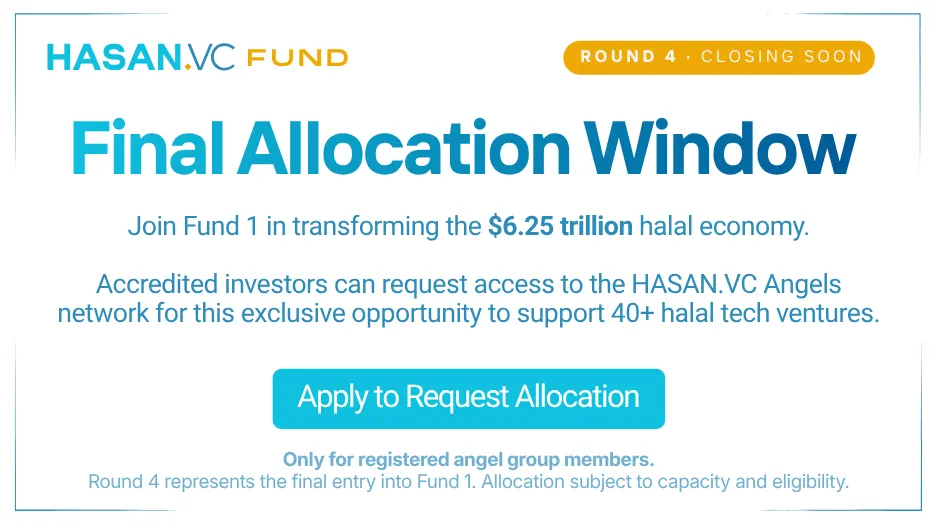
- Case Study 3: VC Funds – A noteble example is The HASAN.VC Fund – A fund that is uniquely crafted to nurture the growth of the most promising impactful halal startups. Funded by the HASAN.VC Angel Investor Community, their innovative model is designed to streamline support and investment in portfolio companies. Transparency is enhanced, and returns are maximized, creating a cohesive ecosystem that delivers unparalleled value contributing significantly to the halal economy. Our guide to angel investors vs venture capital explains how HASAN.VC structures halal venture deals.
- Case Study 4: Islamic Microfinance Initiatives – Islamic microfinance institutions provide financial services to underserved communities, promoting economic development and poverty alleviation. These initiatives use profit-sharing models and avoid interest, supporting ethical investing goals.
- Case Study 5: Singapore and Southeast Asia’s Halal Finance Hub. Singapore is a growing centre for Islamic and ethical finance in Southeast Asia. Its position as a regional financial hub has drawn a rising number of halal-focused funds and accelerators, HASAN.VC among them. From its Singapore headquarters, HASAN.VC applies asset-backed, profit-sharing principles to early-stage halal startups across Asia and the Middle East.
Benefits of Islamic Finance for Ethical Investors
Incorporating Islamic finance principles into ethical investing offers several benefits:
- Enhanced Focus on Social Justice and Economic Equality: Islamic finance emphasizes fairness and equitable wealth distribution, which aligns with ethical investing’s goals of social justice and economic equality.
- Risk Mitigation through Ethical and Responsible Practices: The risk-sharing nature of Islamic finance and its focus on asset-backed transactions help mitigate financial risks and promote stability in investment practices.
- Appeal to a Broader Range of Investors: Islamic finance’s commitment to ethical practices attracts investors who seek to align their financial goals with their values, expanding the appeal of ethical investing.
Challenges and Opportunities
The integration of Islamic finance with ethical investing presents both challenges and opportunities:
- Challenges:
- Regulatory and Compliance Issues: Navigating the regulatory landscape for Islamic finance products can be complex, requiring adherence to both local and international standards.
- Limited Availability of Islamic Financial Products: The range of available Islamic finance products is still developing, limiting options for investors seeking diverse investment opportunities.
- Opportunities:
- Development of New Financial Products: There is potential for innovation in creating new Islamic financial products that meet the growing demand for ethical investments.
- Increased Collaboration: Greater collaboration between Islamic finance institutions and ethical investing communities can lead to new initiatives and partnerships.
The Future of Ethical Investing with Islamic Finance

Looking ahead, Islamic finance is poised to play a significant role in the future of ethical investing:
- Predictions for Growth: The global Islamic finance market is expected to expand as more investors seek financial products that adhere to ethical and religious principles. This growth will drive the development of new financial instruments and services.
- Impact on Global Financial Markets: Islamic finance’s principles of fairness, risk-sharing, and ethical investing are likely to influence traditional financial markets, encouraging more inclusive and responsible investment practices.
- Role of Technology and Innovation: Technology will play a crucial role in advancing Islamic finance, with innovations such as blockchain and fintech creating new opportunities for halal investment and ethical financial solutions.
Conclusion
Islamic finance is not only a financial system but also a movement towards more ethical and responsible investing. By adhering to principles that prohibit interest, promote risk-sharing, and emphasize ethical investments, Islamic finance is shaping the future of ethical investing. This approach offers a framework for financial practices that align with moral and social values, providing new opportunities for investors seeking to make a positive impact.
As we move forward, the growth of Islamic finance and its influence on ethical investing will continue to expand, offering innovative solutions and fostering greater collaboration in the pursuit of a fair and just financial system.
If you’re working out how halal principles apply to your own portfolio, it helps to see them in practice. HASAN.VC screens every startup it backs for halal structure and ethical impact, and it favours profit sharing over debt.
Frequently Asked Questions
What is Islamic ethical investing?
Islamic ethical investing combines the core rules of Islamic finance (no interest or riba, no excessive uncertainty or gharar, and no investment in prohibited industries) with the values-based screening used in ethical and sustainable investing, such as checks on environmental and social impact. An investment that passes both tests is halal and also meets wider ethical and ESG standards.
Is Islamic finance the same as ethical investing?
Not exactly, though they overlap heavily. Ethical investing is a broad category that screens out harmful industries and weighs social and environmental impact. Islamic finance shares those exclusions but adds specific religious requirements, such as prohibiting interest-based transactions and requiring profit-and-loss sharing structures like Mudarabah and Musharakah.
What are some examples of halal investment case studies?
Examples include the Dubai Government’s Green Sukuk, which funds renewable energy and green infrastructure; the Saturna Sustainable Equity Fund, which invests in companies with strong ESG practices; Islamic microfinance institutions that serve underserved communities; and venture funds such as HASAN.VC, which invests in early-stage halal startups through its accelerator.
Which industries are excluded from halal and ethical investing?
Halal and ethical investing both typically exclude alcohol, gambling, conventional banking and insurance (due to interest), pork-related products, weapons, and adult entertainment. Halal screening adds further requirements around debt levels and interest-bearing income specific to each company.
Is halal investing only for Muslims?
No. Halal investing describes how an investment is structured and screened, not who can invest in it. Many non-Muslim ethical and sustainability-focused investors choose halal-screened investments because the exclusions and profit-and-loss sharing principles align with broader responsible-investing goals.
What is a Sukuk?
A Sukuk is an Islamic financial certificate that represents ownership in a tangible asset or pool of assets, rather than a debt obligation. Unlike a conventional bond, a Sukuk generates returns through profit-sharing or lease payments instead of interest.
Is Singapore a hub for Islamic ethical investing?
Yes. Singapore is a growing hub for Islamic and ethical finance in Southeast Asia. It is a major regional financial centre, and a rising number of halal-focused funds and accelerators are based there, including HASAN.VC.
Explore More
- For how halal fund structures work, read How to Invest in Halal Funds: A Guide
- If you’re choosing between funding types, read Angel Investors vs Venture Capital: A Halal Founder’s Guide
- To meet the community behind these deals, visit HASAN.VC Angels
Building a halal startup in tech, agriculture, transportation, real estate or healthcare? Apply to the HASAN.VC Accelerator to work with investors who assess deals using the principles in this article.
Stay ahead of the queue by joining our mailing list for latest updates on events and investment opportunities.