When you read about venture capital, you often hear of fast growth, big risks, and the pursuit of outsized returns. But what if you could combine those ambitions with values rooted in justice, ethics, and faith? That’s where Halal Venture Capital comes in.
In this article, we dive intoHalal VC, an emerging area in Islamic finance and a highly impactful form of Shariah-compliant investing. Halal VC has fast become relevant for practicing Muslims and the broader ethical economy movement, and what the digital AI future holds.
What “Halal VC” Means
Halal literally means “permissible” under Islamic law or the Shariah, which is derived from the holy Quran and Hadith.. In financial terms, Halal venture capital refers to investing in startups in ways that do not violate key Islamic finance principles. These include:

- No interest (riba): Investments should not have any lending with interest.
- Excessive uncertainty or speculation (gharar): business models or contracts should avoid high ambiguity or gambling-like dynamics.
- Avoiding haram industries: underlying business in sectors involved with alcohol, gambling, conventional financial services (due to interest), tobacco, weapons, or anything clearly prohibited under Shariah.
- Profit-and-loss sharing: Participation-based partnership models ( mudarabah, musharakah) are preferred over debt-based ones.
- Ethical operations include honesty, transparency, fairness, stewardship, social welfare, not causing harm to people or the environment, and treating workers fairly.
Halal VC is more than a filter; it’s a holistic approach. It’s an ethical paradigm. It involves choosing how to invest, who to invest in, and how the contracts are structured so that the returns are acceptable under faith and ethics, not just profits.
How It Differs from Conventional Venture Capital

Here are some key contrasts between conventional VC and Halal VC:
| Feature | Conventional VC | Halal VC |
| Funding structure | May involve debt, convertible notes, interest-bearing instruments, etc. | Prefers equity, profit-sharing, contracts structured without interest; avoids or carefully handles any financing that could conflict with Shariah rules. |
| Types of business | Any business with high growth potential, regardless of industry, so long as legal/market allowed | Excludes haram sectors which are disallowed to protect society and uphold morals and dignity |
| Risk sharing / capital guarantee | Some investors expect downside protection; liquidation preferences, convertible notes with caps; preference shares etc. | These can be problematic if they mimic interest or guarantee returns or capital. |
| Purpose beyond profit | Scalability and valuations are priority, and these are functions of the profit motive | Profit is important, but also considerations of social good, ethical impact, justice, community benefit; seeking “barakah” (blessing) in business and serving our users. |
Why Halal VC Is More Important Now
The desire to invest is driven by high inflation and better education. At the same time, public stock trading has seen a decline in demand and sentiment due to the perception that it is manipulated (See Oxford Study: Retail investors are amateurs in a high-stakes market: they cannot win) and due to the involvement of Bigtechs in various issues and scandals.

Additionally, several forces are pushing growth in the VC and startup space. There is a rising demand for ethical, sustainable, faith-aligned investing in Muslim-majority economies and globally. Here are some of the drivers and recent data:
- Growth of Islamic finance globally: The global Islamic finance market had about US$4 trillion in assets in 2024, expected to exceed US$7.7 trillion by 2033.
- Shariah-compliant investment products are multiplying: fintech apps and platforms, Web3 apps, alternative finance, real estate, , sukuk, takaful, and ethical funds are expanding.
- Startup and VC activity in Muslim markets is rising in some places, although unevenly:
- In MENA, total startup investment dropped about 42% in 2024 compared to 2023, but the number of deals remained stable and equity-based deals (excluding debt) dropped less sharply. Finance Middle East
- UAE regained its lead in 2024 with about US$1.1 billion invested across ~207 deals. Saudi Arabia followed with US$700 million in ~186 deals. Egypt raised US$334 million across 84 deals.
- Türkiye’s startup investment volume surged about fivefold in 2024 to US$2.6 billion, up from around US$500 million in 2023. Fintech, biotech, and AI were among the leading sectors. muslimnetwork.tv
- Ethical & impact investing is trending globally, especially after COVID, climate pressures and rising inequality. Investors are more aware that financial returns aren’t the only measure; environment, social governance (ESG) factors, halal and ethical alignment are equally or even more important for many.
- The Islamic digital economy observed strong activity among startups in 2024-2025: hundreds of deals and investments, mostly in the early stages. Sectors like halal e-commerce, Islamic fintech, edtech, healthtech and AI-driven halal products are getting funded.
These trends show an upward trajectory for both supply and demand as more entrepreneurs build startups that meet ethical or Halal criteria, and more investors looking for such opportunities.
Examples
Here are some examples that illustrate Halal VC and Muslim countries:
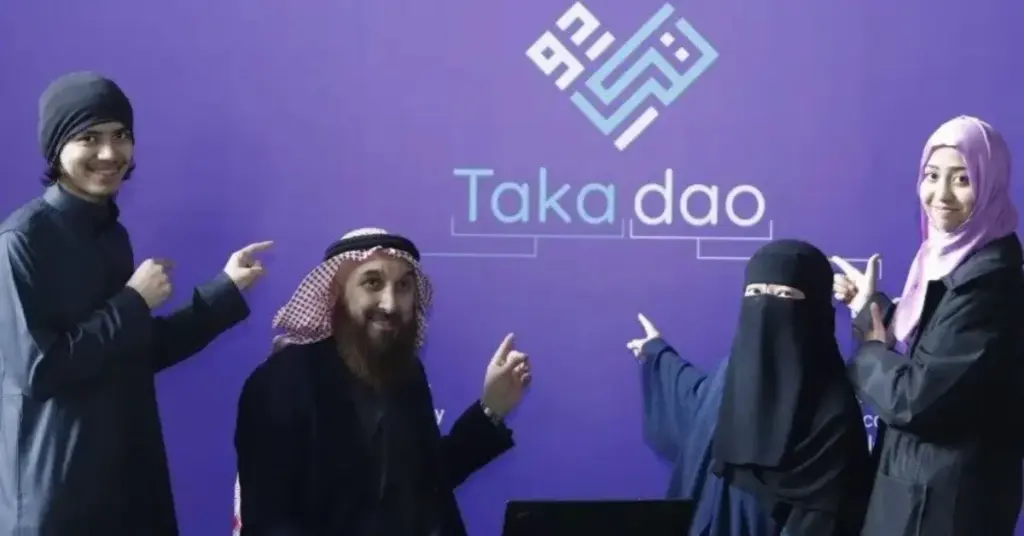
- Takadao: A Halal Singapore-Saudi fintech that is building Web3 community-owned alternatives to traditional finance. The startup recently secured US$1.5 million in seed funding from HASAN.VC and investors from France, the UK, Japan, Saudi Arabia, and the US, bringing its total funding to US$3.1 million. With products like The LifeDAO and the newly launched LifeCard bridging stablecoin wealth with real-world spending, Takadao demonstrates how ethically aligned, halal-first innovation continues to attract international capital and validate the global demand for “Muslim-friendly” and halal financial solutions.
- Saudi Arabia: In April 2025, Saudi startups raised US$158.5 million across eight deals, more than two-thirds of all startup funding in MENA that month. The strong performance signals investor confidence in Saudi’s startup ecosystem.
How Halal VC Supports Social & Economic Value
Halal VC isn’t just about avoiding what’s wrong, but about proactively doing good. Here’s how:

- Community & social impact built in: Startups that serve Muslim consumers often tackle real needs—halal food supply chains, faith-tech, education, community services, ethical lifestyle platforms, etc. These tend to have built-in positive social externalities.
- Encouraging fairness and equity: Because of the profit-loss sharing model, there is often more alignment between founders and investors (less “debt burden”). Also, ethical constraints push toward transparency in operations.
- Financial inclusion: In many Muslim countries large parts of the population are underserved by conventional banking/finance due to lack of Shariah-compliant options. Halal VC, halal fintech, sukuk, etc., can help bring access to capital and financial services in ways people feel comfortable with.
- Sustainable/ethical business models: Given the constraints (avoidance of harmful industries, risk of wrongdoing etc.), many halal-aligned businesses tend to factor in environmental, social governance (ESG) type concerns more naturally.
- Building trustworthy brand & consumer loyalty: In Muslim markets, products and services perceived as halal and ethically sound can win consumer trust and loyalty in a way that purely profit-driven products may not. That can translate into durable long-term businesses.
Challenges & What Needs Careful Attention
It’s not all smooth sailing. These are some of the challenges the Halal VC space faces:

- Clarity & standardization of Shariah compliance: Different scholars / advisory boards may interpret rules differently. What’s “acceptable debt level,” or what’s “haram business involvement indirectly” can vary. Investors and startups need clear, trusted certification or advisory mechanisms. For example, the popular SAFE note used for early-stage investing has potential Shariah issues due to its debt-like nature.
- Returns vs constraints trade-off: Because certain business models, industries, or instruments are off limits, the investment universe is narrower. That can limit diversification in those acceptable sectors.
- Product structures & legal nuance: Some conventional VC terms (convertible notes, preference shares, liquidation preferences, guaranteed minimum returns) may conflict with Shariah principles. Structuring deals that satisfy both investor expectations and religious/ethical constraints requires creativity, legal work, and sometimes compromise.
- Regulatory & tax environments: In many Muslim majority countries, the legal and regulatory frameworks for Islamic finance may be more mature for banking and sukuk and less so for VC / startup funding. There may be tax disadvantages, foreign investment restrictions, or legal uncertainties. In some countries, there may be tax benefits.
- Awareness & capacity: Founders may not always understand what makes an investment Halal; investors outside the community may not fully appreciate or demand the specific structures. Talent and capital for halal-aligned startups can be harder to access if the ecosystem is underdeveloped.
The Future of Halal VC: Opportunities & Why Global Investors Are Paying Attention
So where is this going? And why should global investors (not just those in Muslim markets) be watching this space?
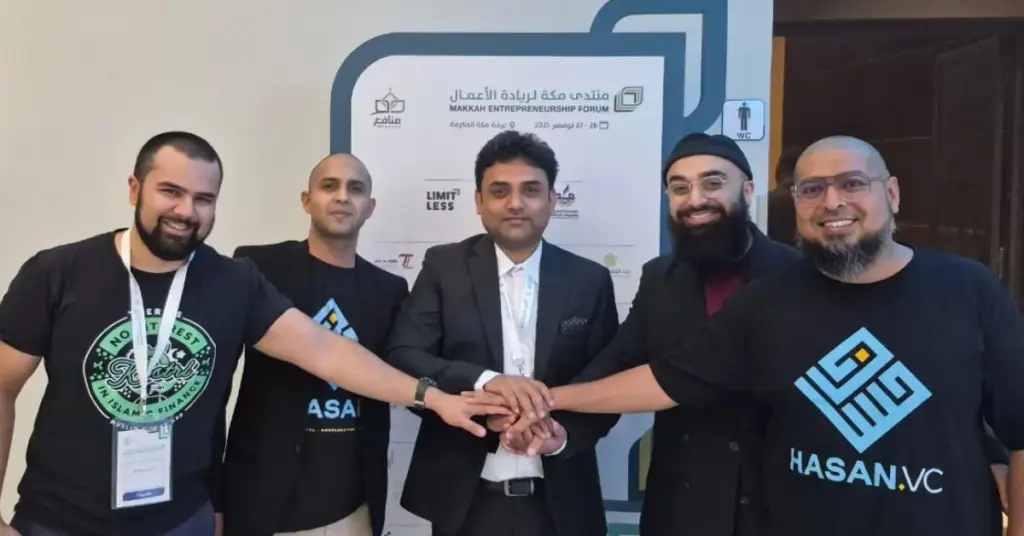
- Growing markets + population dynamics
The Muslim population is large and young. Consumer demand in Muslim-majority countries (in Southeast Asia, South Asia, the Middle East, and Africa) is expanding quickly. As incomes rise, more people seek products and services that align with both modernity and their faith/values. - Ethical finance is becoming mainstream.
ESG, impact investing, ethical finance, etc., are no longer fringe ideas. Institutional investors, sovereign wealth funds, and pension funds in the West are increasingly incorporating values, sustainability, and impact. Halal VC fits into that paradigm neatly. - Innovation & fintech to unlock new models
Technology (fintech, blockchain, digital platforms) can lower costs, improve transparency, allow for new deal structures that align with Shariah. Tools for screening, for certification, for profit-sharing contracts over smart contracts etc. - Cross-border investment potential
Investors in non-Muslim majority countries are interested in halal or ethical funds, both for faith-based investors and for general ethical/inclusion appeals. That means capital flows from outside the Muslim world into halal-aligned startups will likely increase. - Regulations & institutional support catching up
Governments in several countries are pushing to strengthen their Islamic finance sectors, harmonise standards, and provide incentives. This helps reduce friction for Halal VC.
Conclusion: Where We Might Be Headed
Halal VC stands at an intersection of faith, ethics, and growth. As more entrepreneurs build startups that not only aim to scale fast but also to do good both for their communities and for the planet Halal VC offers a framework for investing that feels more aligned, more responsible, and with its own kind of long-term value.
Global investors are waking up to the opportunity: there is demand, there is value, and there is increasing clarity on how to do it properly. For Halal VC to thrive, though, the ecosystem needs stronger standards, better deal structures, more awareness, and legal/regulatory support.
If you’re an entrepreneur, investor, or simply someone who cares about values in finance, this moment is exciting. Halal VC isn’t just a niche for Muslims, it’s part of the future of ethical capitalism itself.
Stay ahead of the queue by joining our mailing list for latest updates on events and investment opportunities.