This article is for informational purposes only and is not financial or Shariah advice. Some platforms may require Accredited Investor status. We encourage all readers to perform their own due diligence and consult with legal or religious counsel before deploying capital. HASAN.VC assumes no liability for investment decisions made based on this information.
For many Muslims, Shariah-compliant investing revolves around wealth preservation. This would typically mean a portfolio split between gold and real estate (or even just sitting dormant in a bank account). It was a strategy built on tangible assets, holding onto what you already have because you can physically see it.
While assets like gold serve to preserve wealth, it does not build the future. It generates little employment for the next generation let alone solutions for the systemic challenges facing the Ummah and humanity in an increasingly volatile world.
To achieve true and meaningful impact, there must be a shift toward investments that align with ethical values while contributing to healthy economic growth. In this context, Islamic Venture Capital is not merely an alternative, but an essential driver of progress.
We believe this frontier must be approached with a new and healthier mindset. The mainstream startup world is obsessed with “Unicorns,” but for the ethical, Shariah- conscious investor, this ‘betting big’ mindset is less favoured. Society needs a more resilient path which is more intune to reality.
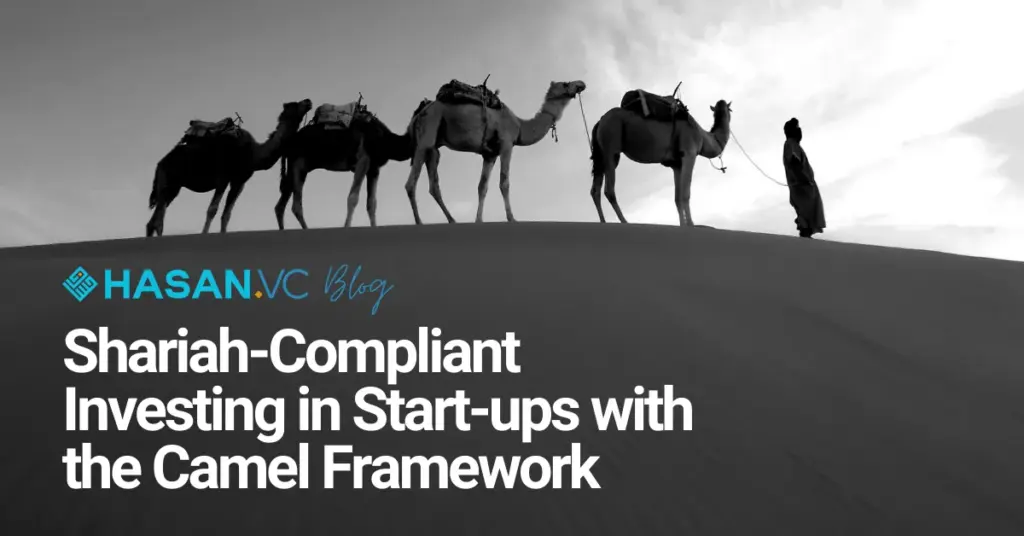
We champion the Camel Startup philosophy.
Related Insight: How Halal Venture Capital Is Unlocking $3 Trillion Opportunities in Emerging Markets
The Mirage of the Unicorn vs. Camel Resilience
In the high-stakes environment of Silicon Valley, the “Unicorn”, a startup that reaches a valuation of $1 billion is often the ultimate trophy. However, the journey toward this valuation relies on a “burn-to-grow” strategy, where immense capital is spent to buy rapid scale, often at the expense of long-term viability. This “growth at all cost” mindset can lead to a fundamental disconnect, where the startup’s valuation is prioritized over a sustainable and sensible business model.

A culture defined by high “burn rates” clashes with the Islamic principle of Mizan (balance). For the disciplined investor, the Unicorn often proves to be an overvalued mirage that is highly speculative and inherently fragile. When global liquidity contracts and capital becomes scarce, such companies frequently collapse. This occurs because the underlying structures were not engineered for long-term endurance, but rather for a rapid exit or acquisition.
HASAN.VC prioritizes the cultivation of Camel startups over the pursuit of speculative Unicorns. A Camel startup operates on three core principles that align with Islamic ethical standards and serve to develop long-term economic stability:
- Sustainability as a Foundation: There is an active focus on generating early revenue and the management of investor capital as an Amanah (trust) that is handled responsibly.
- Market Resilience: By maintaining lean operations, these ventures are engineered to navigate economic volatility and market shifts, increasing survival rates in turbulent conditions.
- Dignified Scalability: Growth is pursued at a measured pace that respects the well-being of the founders, the integrity of the workforce, and the broader community.
Further Reading: 5 Reason Why Camels Make Amazing Startup
A strategic breakdown of why the Camel make a better Startup than the Unicorn
Filling the Market Gap: Serving the Muslim Economy
The global Muslim economy represents one of the most significant underserved segments in the modern financial landscape. Although the Ummah constitutes over 25% of the world’s population, the volume of venture capital directed toward Muslim founders remains a marginal fraction of the global total. Halal Venture Capital is still nascent, estimated to be at US$3bn, it is a small niche in the global VC scene.

In tech, most global apps and solutions do not factor in the unique demand for Halal products and services. While the compliance factor is important, the spirit, nature and impact of conscious and responsible business is where humanity can gain and advance sustainably in a healthy way.
Prioritizing the Real Economy over speculative trading redirects capital into tangible sectors like healthcare and ethical fintech to drive actual growth. This shift turns Shariah compliance into a tool for job creation by funding and helping create new businesses that innovate, build new technology products, and solve real problems.
It also drives the circulation of wealth by ensuring money reaches suppliers and employees rather than sitting in financial silos. Ultimately, this increases the velocity of economic activity, as every dollar spent on wages and infrastructure ripples through the economy to create more opportunity for everyone.
The Power of 40: Systematic Risk Mitigation
Angel investing is frequently approached with caution due to the high risk associated with the asset class. Data from Startup Genome indicates that approximately 90% of startups fail, while research from Harvard Business School further clarifies that 75% of venture-backed startups fail to return investor capital. In a concentrated portfolio of only a few ventures, the mathematical probability of loss is high.

To capture high-growth potential, the fundamental principles of Modern Portfolio Theory are applied. The strategy involves constructing a “caravan”, building a diversified portfolio of 40 (or more) startups.
AT HASAN.VC, our Fund 1 targets to invest in 40 to 50 startups, building our portfolio – a herd of Camel startups.
Diversification serves as the primary mechanism for risk mitigation in this asset class. By maintaining exposure across at least 40 startups, the high performance of a few can offset the losses of others, enhancing the stability and returns of the overall portfolio.
Technical Insight: The Importance of Having a Portfolio as a Startup Investor: Insights from Islamic Finance
Technical insights into how Modern Portfolio Theory and diversification serve as the primary safeguards against the inherent volatility of early-stage technology investments.
The Paradigm Shift in Shariah-Compliant Investing
The transition from passive wealth preservation to active growth represents a strategic evolution in the impact of capital within the Ummah. Historically, high-growth venture capital was a closed ecosystem, largely restricted to institutional players and small circles of high-net-worth individuals.
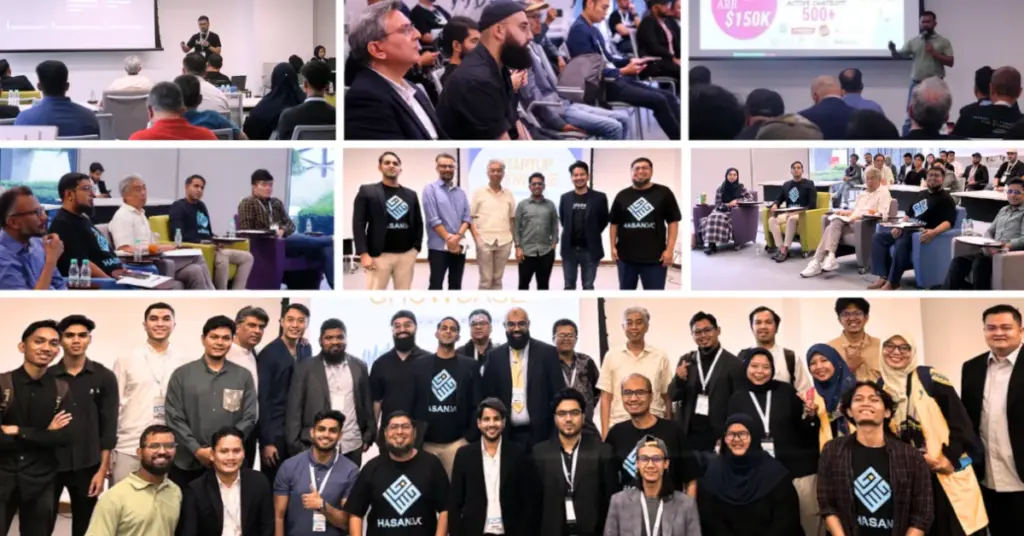
This shift moves away from the rigid bureaucracy of traditional finance toward a direct, thesis-driven approach. By joining angel groups, investors can access high-growth venture capital opportunities that were once reserved for institutional players. This model makes the ecosystem more inclusive, allowing wealth to circulate effectively through specialized collectives like the HASAN.VC Angel Group.
Through this collaborative structure, investors gain entry to a diversified portfolio of startups, balancing high-growth potential with a professional, community-driven framework.
In an Islamic economic context, this circulation is the practical application of Barakah (divine blessing through growth). Stagnant wealth inherently loses its potential to drive change and create value for society. Islam strongly discourages hoarding. Conversely, when capital is deployed into ventures solving tangible human problems, it can leave a legacy of value that transcends generations.
The Camel framework ensures that this deployment is not fueling artificial growth, but on building a resilient foundation for a better future.
Frequently Asked Questions (FAQ)
What is the Camel startup philosophy, and how does it differ from a Unicorn?
Unlike Unicorns, which often prioritize rapid, “burn-to-grow” scale at the expense of long-term viability, a Camel startup focuses on sustainability, early revenue, and market resilience. The Camel model aligns with the Islamic principle of Mizan (balance), favoring measured growth and lean operations over speculative, high-risk valuations.
How does Islamic Venture Capital (IVC) differ from traditional venture capital?
Traditional VC frequently uses debt-like instruments and operates with growth at all cost mentalities. In contrast, IVC is built on a partnership of equals model that avoids interest (Riba) and prioritizes ethical, Shariah-compliant sectors like healthcare and fintech. It views capital as an Amanah (trust) to be handled responsibly.
Why does HASAN.VC target a portfolio of 40 to 50 startups?
This strategy is based on Modern Portfolio Theory to mitigate the high inherent risk of angel investing. Since a large percentage of startups fail, building a caravan of at least 40 companies ensures that the high performance of a few successful ventures can offset losses elsewhere, providing greater overall stability and return potential.
How does this investment approach contribute to the Real Economy?
Rather than keeping wealth stagnant in dormant bank accounts or speculative trade, this framework drives the circulation of wealth. By funding startups that solve tangible problems, capital is used for job creation, infrastructure, and innovation, which creates a ripple effect of opportunities across the global Muslim economy.
Who can participate in these investment opportunities?
Participation is currently limited to members of the HASAN.VC Angel Group. This collective structure allows individual investors to access high-growth venture capital opportunities that were historically reserved for large institutional players.
Stay ahead of the queue by joining our mailing list for latest updates on events and investment opportunities.