Unity Grammar is an Islamic school in Australia. It has no Arabic in its name, no Islamic calligraphy, nothing that signals its identity at first glance. That’s not an oversight, it’s a deliberate branding decision, and according to brand strategist Mohammed Hassan, it’s often the right one.
Should a halal startup use an explicitly Islamic name and design?
There’s no fixed rule, it depends on what’s already around you. Hassan’s answer, discussed on Episode 1 of Camels vs Unicorns, is that the decision should follow branding’s core goal: standing out.
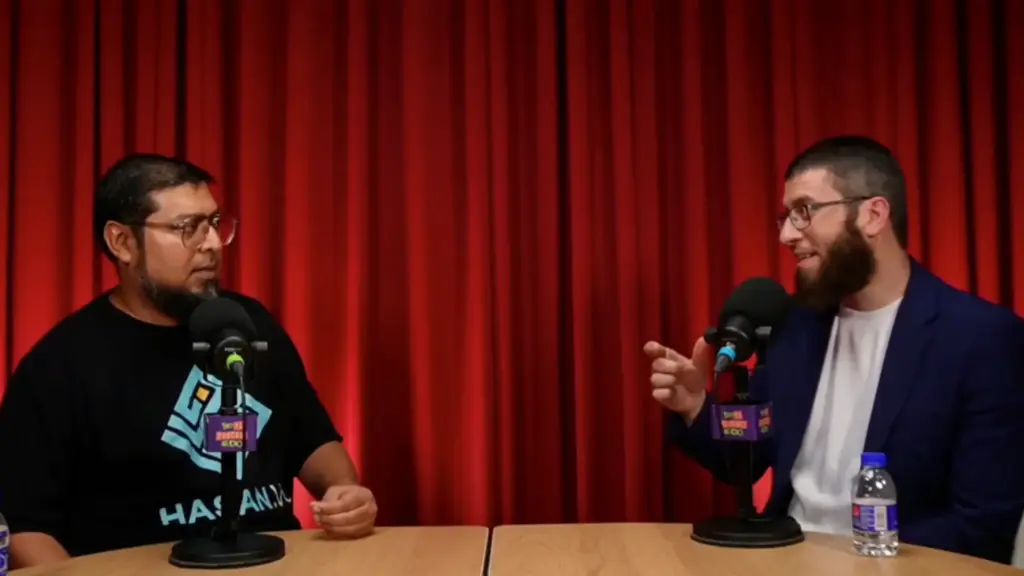
If your market is saturated with Arabic names and Islamic imagery, adding another one makes you blend in, not stand out. However, if you’re the first, going explicit can work in your favor.
What is the “zigzag” rule in branding?
The zigzag rule is simple: when everyone zigs, you zag. If a market is full of similar-looking, similarly-named competitors, the winning move is usually to look different from that pack, not to look more like it.

Applied to Muslim-founded startups, that means the “most Islamic-looking” brand isn’t automatically the best one. If you’re launching in a city with no Islamic schools, an explicitly Islamic name can define the category. If you’re the fifteenth Islamic school in that same city twenty years later, an explicitly Islamic name just makes you harder to tell apart from the other fourteen.
Why doesn’t Unity Grammar, a Muslim school, have an Islamic name?
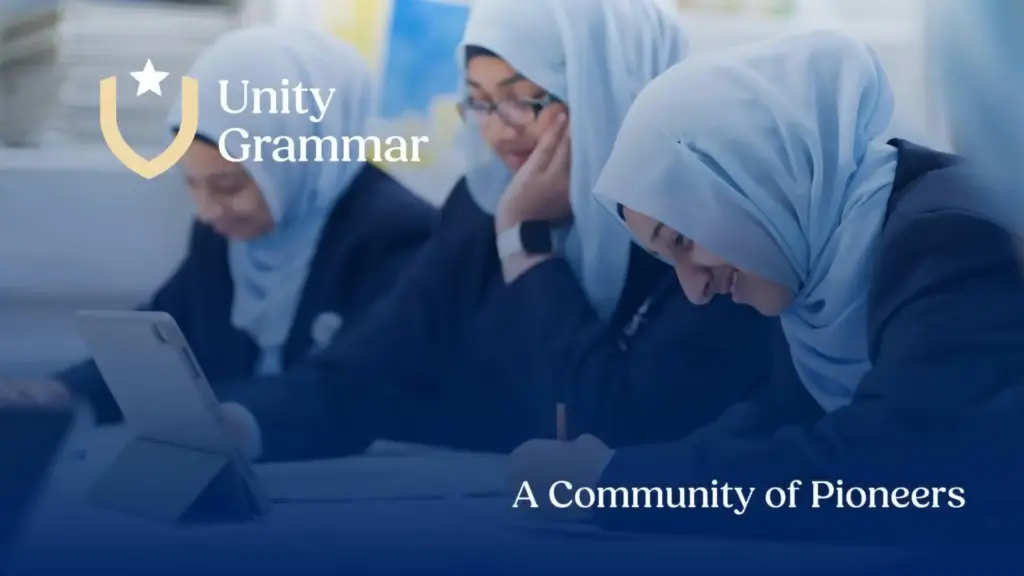
Because by the time it launched, an explicit name would have blended in rather than stood out, and “Unity” still carries the values the school is built on, just without the literal signaling. Hassan frames it as a timing and context call, not a religious one: a name doesn’t need Arabic calligraphy or a word lifted from the Quran to be rooted in Islamic values. It needs to fit the audience, the market, and the moment.
The same logic played out closer to home for HASAN.VC. General Partner Umar Munshi explains in the episode that the team deliberately avoided sounding “too religious, too Arabic” and simply called it HASAN but the name alone caused confusion, since “HASAN” reads as a common personal name rather than a company. Adding “VC” fixed the clarity problem without adding any religious signaling.
Does Islamic branding actually help you reach non-Muslim customers too?
There’s a market-specific nuance worth adding here. On a separate HASAN.VC podcast episode, Umar pointed out that in markets like Malaysia, explicit Islamic branding doesn’t only appeal to Muslim customers, it can pull in non-Muslims who are already comfortable with the industry.
To put this into context: in one of HASAN.VC programs with roughly 20 participants, three or four were non-Muslim founders exploring Islamic finance ventures, and by Umar’s account, two of them had a firmer grasp of the underlying concepts than many of their Muslim peers, simply because they were drawn to the theory and already active in the industry.
This clip is from a separate, wider-ranging HASAN.VC podcast episode with Arfaah Farooq — Islamic branding is one point in a broader conversation about building startups, not the episode’s main topic.
The rule of thumb discussed here narrows the decision further, based on who the product is actually for rather than which market it’s in: a product built for a general audience should stay neutrally branded regardless of local familiarity with Islamic finance, while a product built around a specific Muslim need, a Quran app, or a Muslim matchmaking service, for example, can justify leaning into explicit Islamic branding.
Two companies in HASAN.VC’s own portfolio show that split in practice.
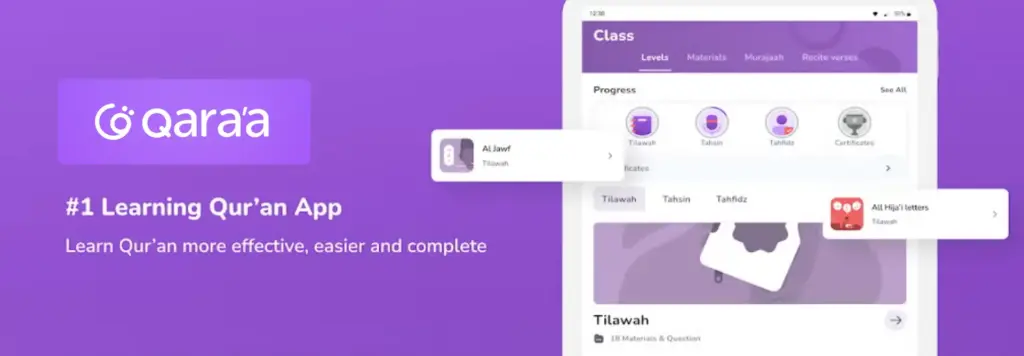
Qara’a is a Quran-learning app, a product built entirely around a specific Muslim need, and its branding leans all the way into that: Quran recitation, tajweed correction, and adhan reminders are front and center in both the name and the design.

Hirix, an AI-powered recruitment platform also in HASAN.VC’s portfolio, sits at the opposite end: hiring is a general-audience service, not a Muslim-specific one, so its branding stays entirely neutral, nothing on the site signals a halal or faith-based angle at all.
How should founders decide whether to go explicit or neutral?
Hassan’s advice comes down to a few concrete questions worth answering before you lock in a name or logo:
- Who is actually in your market already? Look at competitors’ names, colors, and logos before choosing your own direction.
- Where is your audience, geographically and culturally? Hassan’s rule of thumb: “If your audience is Arabs, put an Arabic word. If your audience is English-speaking or subcontinent or Southeast Asian, use something that’s more culturally relatable.”
- What position are you claiming? A brand aiming for a premium, “Mercedes-Benz” positioning needs to look and read as prestigious. A brand aiming for mass, everyday accessibility needs the opposite.
- Does the name still carry your values, even without explicit religious language? Unity Grammar didn’t need “Islamic” in the name to be built on an Islamic principle.
- Is the product for a general audience, or a specific Muslim need? General-audience products lean neutral; something like a Quran app or a Muslim matchmaking service can justify explicit Islamic branding.
None of these questions have a universally correct answer, that’s the point. The right call is contextual, and it changes as the market around you changes.
The bottom line
Being visibly, explicitly Islamic or halal isn’t automatically the strongest branding choice for a Muslim-founded startup, sometimes it’s the move that makes you disappear into a crowded market instead of standing out in it.
The stronger question isn’t “how Islamic or Halal should this look?” but “what does my specific audience, in my specific market, actually need to hear and see right now?” Get that right, and the values can carry through the brand even when the name itself stays neutral.
For more on how HASAN.VC evaluates the founders behind these brands, see Beyond the Unicorn: How to Build a Resilient Camel Startup in the Desert Economy.
This idea is from a much wider conversation — watch the full episode above for Mohammed Hassan’s take on Islamic design principles, personal branding, and how AI is changing the creative industry.
Camels vs Unicorns, hosted by Umar Munshi, features conversations with founders and investors building profitable, values-driven businesses across fintech, AI, and impact investing, proving that sustainable growth is the way forward. Subscribe to listen today.
Stay ahead of the queue by joining our mailing list for latest updates on events and investment opportunities.