The default model for many startups is the Unicorn where Startups are glorified for rapid growth and sky-high valuations, but beneath the hype there is a harsh reality. Unicorns often come with monolithic structures, rigid fixed costs and are highly dependent on external capital to continue.
When there are market shocks or investment dries up, the fastest-growing ventures are often the first to collapse. By early 2020, even startups with hundreds of employees and global operations discovered that focusing on hyper-growth is no longer realistic and is replaced by survival as the top priority.
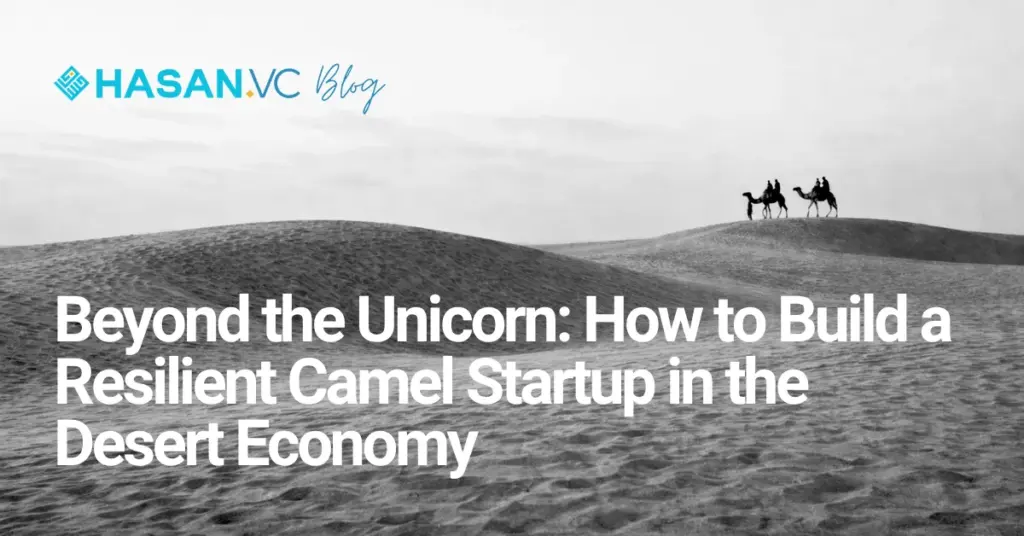
The Camel Startup offers a different path. Built for resilience and self-sustaining momentum, it prioritizes adaptability over hype, and longevity over fleeting valuations. Like the camel navigating the desert, these startups thrive in harsh, resource-constrained environments. They operate with independent, swappable modules both in technology and talent and rely on revenue, not investor capital, to sustain their survival.
To understand why we’ve moved away from the Silicon Valley Unicorn model toward a more resilient approach, check out. Why the Silicon Valley VC Model is Broken
DNA of the Camel Startup
Capital is used as a tool to accelerate, not as a life-support machine. Ethical boundaries, operational agility, and strategic reserves form the structural DNA of a Camel Startup, allowing it to survive economic “sandstorms” and seize opportunities others cannot.
This article lays out the Camel Startup blueprint, a systematic, operationally grounded approach to building ventures that endure. It is for founders, operators, and investors who are ready to move beyond fragile growth models and embrace a framework where resilience, revenue, and ethics are not optional. By the end, you will see why the next generation of enduring companies will not look like unicorns, they will look like camels.
Learn more about the venture builder pioneering the Camel Startup framework and our mission to build resilient, modular businesses in the Desert Economy.
The Hype of Unicorns
The Unicorn model thrived in the “Greenhouse” era (2010–2021), when capital was abundant, cheap, and seemingly endless. Startups were rewarded for speed, hype, and aggressive fundraising. Growth was prioritized above all else often at the expense of business fundamentals. This model built monoliths: rigid, capital-dependent structures with high fixed costs and a lack of nimbleness to overcome market shocks.
When the pandemic hit and investment slowed, even large, globally distributed teams found themselves exposed. Payrolls, leases, and vertically integrated operations became anchors, dragging companies down. Startups that seemed unstoppable suddenly faced survival-level decisions and many did not survive.
The problem lies in structural fragility. Unicorns tend to be “one-piece” businesses: every department, process, and technology is tightly coupled. If a single module fails, a vendor, a cloud provider, or a marketing channel, the entire system feels the shock. Dependence on venture capital for day-to-day operations creates further vulnerability. Simply, Unicorns are optimized for growth in ideal conditions, not resilience in uncertainty.
This is the reality the Desert Economy demands: a world where capital is scarce, markets are volatile, and flexibility is essential. Startups cannot survive by chasing valuations or burning investor cash. They must survive first, then grow strategically.
The Camel Startup answers this challenge. By building in modularity, operational elasticity, and revenue-first sustainability, fragility transforms into a strategic advantage. Its design allows failures to be isolated, costs to contract or expand swiftly, and capital to accelerate rather than sustain. In the Desert Economy, the Camel survives and thrives while Unicorns whither.
The Camel Startup Blueprint
The Camel Startup is built for survival, not spectacle. Its core principle is modularity: the business is structured as independent, swappable Building Blocks rather than a single Rigid Structure. Each module whether product, marketing, technology, or operations can be paused, replaced, or scaled without destabilizing the whole system. This design allows the startup to adapt instantly to changing conditions, much like a camel adjusting its stride to shifting sands.
Operational Agility is equally critical. The Camel Startup may leverage a distributed, API-first model, using cloud infrastructure, low code tools, and fractional expertise. Payroll becomes variable, operations flat and automated, and overheads shrink. If a marketing channel fails, a vendor raises prices, or cash is tight, modules can contract or expand as needed. This is metabolic efficiency: the business breathes with the market instead of choking on rigid structures.
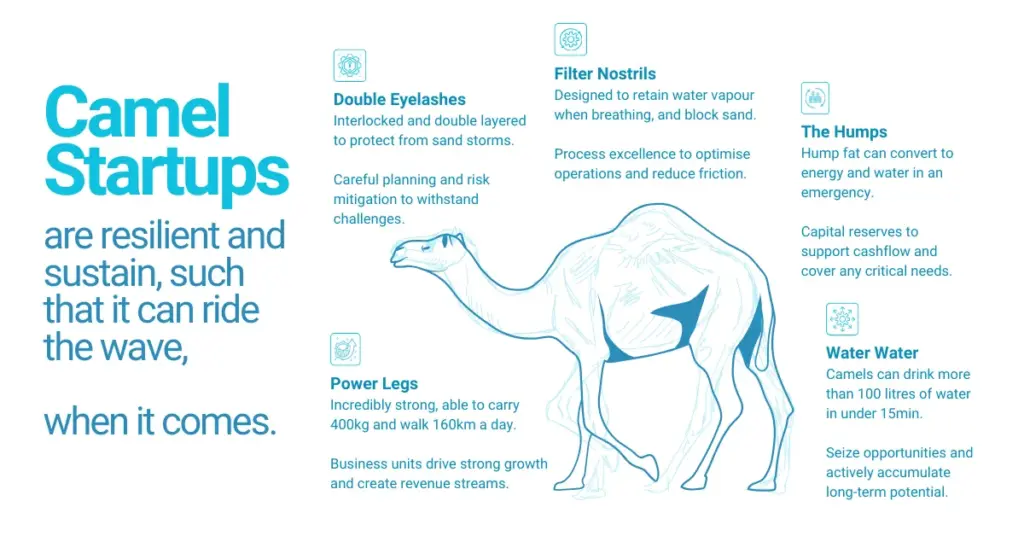
Financial Resilience underpins every decision. Revenue covers core operations, ensuring the Startup default status is “Alive.” Capital injections are an accelerant, not for life support. Strategic reserves, the business’s “Hump” allow founders to act decisively during downturns, acquire opportunities when others falter, and maintain autonomy in fundraising.
Purpose Driven Camel Startups integrate ethical clarity and purpose. Red Lines define non-negotiable boundaries, ensuring growth does not compromise principles or community trust. Culture is mission-driven and reinforces long-term sustainability rather than short term optics.
Together, these mechanisms form a blueprint for the Desert Economy: a startup that can survive sandstorms, pivot under pressure, and scale responsibly when conditions allow. Unlike the fragile Unicorn, the Camel Startup thrives in harsh markets.
Strategic Survival Mechanisms
The Camel Startup doesn’t rely on luck, it builds survival into its DNA. Two mechanisms are central: financial independence and operational resilience.
1. The Financial Hump: Strategic Reserves
A camel’s hump stores energy for harsh conditions. This is the Financial Hump: a reserve of cash or revenue surplus that allows the company to survive market droughts without being forced into unfavorable fundraising. Unlike Unicorns, which burn investor capital to stay alive, the Camel Startup prioritizes being Default Alive.

Strategic reserves give founders control over timing and growth: you can expand during opportunity-rich periods, contract during downturns, and even acquire talent or customers while competitors struggle.
Studies show that companies prepared for economic contraction grow at an average 17% CAGR, while capital-dependent competitors stall. In short, financial independence is a competitive edge, not just a survival tactic.
Camels don’t just rely on external water; they store their own. However, knowing when and how to tap into outside capital is a vital skill for scaling. How to Raise Funds Step-by-Step
2. The Double Eyelids: Protecting Vision in Crisis
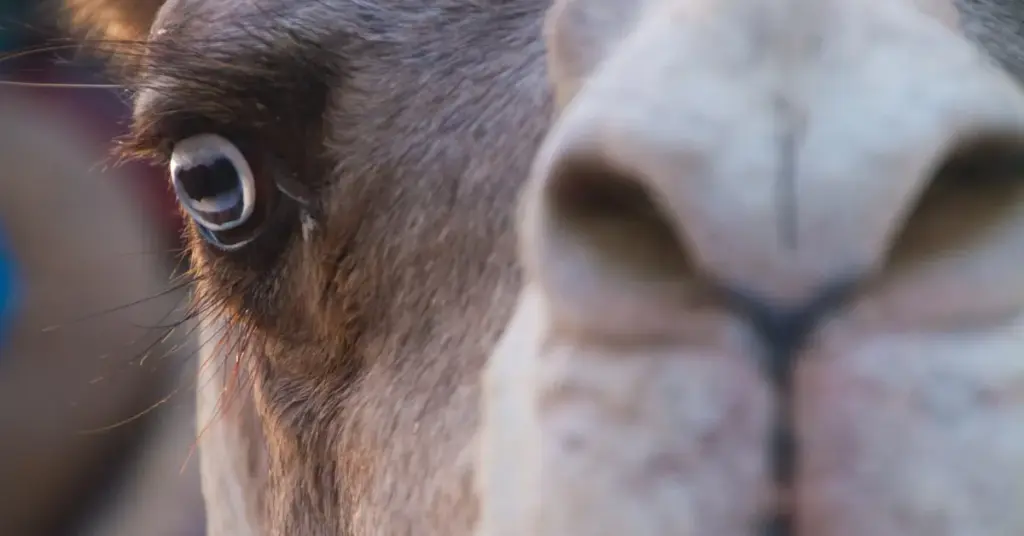
A camel’s eyelids shield it from sandstorms. For startups, this translates into operational filters and modularity that maintain clarity during volatility. Lean overheads, automated systems, and decoupled modules enables the company to see the path forward, even when markets shift unexpectedly.
This design eliminates single points of failure: if a vendor fails, a channel spikes in cost, or a module underperforms, it can be managed without compromising the business. The Camel Startup moves steadily while competitors panic, maintaining operational momentum when others are immobilized.
Together, the Financial Hump and Double Eyelids create resilience by design: the ability to survive crises, adapt quickly, and grow responsibly. These mechanisms turn fragility into strategic advantage. The Camel doesn’t just endure sandstorms, it thrives in them.
3. The Nostrils: Fractional Economy and Metabolic Efficiency

A camel’s nostrils are a marvel of efficiency, capturing moisture from every breath. In business, this translates into Metabolic Efficiency: extracting maximum value from every operational resource while maintaining flexibility.
The Camel Startup achieves this through the Fractional Economy. Instead of locking into fixed, high-cost payrolls, companies leverage fractional experts, project-based teams, and variable infrastructure. Core functions remain in-house, while specialized work scales up or down depending on growth and market conditions.
Technology follows the same principle. Modular, API-first systems, low-code platforms, and cloud-native tools ensure that operational modules can be swapped, paused, or scaled independently. If a vendor raises prices, a channel underperforms, or demand shifts, the Camel can adjust instantly, minimizing waste and preserving critical functions.
Revenue-first discipline underpins all of this. Every module is justified by contribution to sustainable cash flow. Investor capital is an accelerator, not a life-support machine. By breathing revenue rather than funding, the Camel Startup ensures that growth is earned, self-sustaining, and defensible.
This design creates a startup that is lean, adaptive, and antifragile. Modules fail without threatening the system; teams flex without layoffs; capital is deployed strategically rather than out of desperation. In the Desert Economy, this metabolic efficiency is not optional.it is survival, encoded in the company’s architecture.
How to Build a Camel Startup
Building a Camel Startup requires intentionally decoupling operations, technology, and talent to create a business that survives uncertainty and scales when opportunity arises.
1. The Distributed Workforce: Payroll as a Variable Cost
The most dangerous fixed cost in a startup is a rigid, oversized payroll. The Camel model turns this into a flexible, outcome-driven structure. Core leaders remain in-house, but specialized roles are filled with fractional experts or project-based contributors.
Teams are distributed and measured by objectives, not hours. This ensures the company can scale up quickly when needed, or contract without trauma during market shifts. The focus is on mission-driven talent, not titles or perks, allowing the startup to maintain agility and preserve its “core organ” during sandstorms.

2. Composable Tech: Swappable Infrastructure
Camel Startups avoid building rigid, proprietary systems before their model is validated. Instead, technology is modular, API-first, and cloud-native, enabling each piece to be swapped without disrupting the business.
- Low-code or no-code tools allow rapid prototyping and validation.
- Vendor or platform dependencies are isolated to avoid single points of failure.
- Modules can contract or expand in real-time based on demand.
3. Operational Testing and Adaptation
Every module, people, technology, and processes is subject to the “Sandstorm Test”: if a critical function fails, can the system survive and continue delivering value? If not, redesign it.
4. Revenue and Ethics as Operating Principles
Every operational choice must reinforce self-sustaining revenue and respect non-negotiable Red Lines. Capital accelerates, it does not prop up fragile structures. Ethics and operational resilience are structural advantages, not optional ideals.
Together, these mechanisms create a company that is adaptable, lean, and resilient. Payroll, technology, and operations are elastic; modules fail without bringing the system down; and the organization remains capable of strategic acceleration when the market allows. This is the practical architecture of a Camel Startup.
The Ethical Foundation: Red Line and Ehsan
Resilience alone is not enough. A Camel Startup also embeds ethics and purpose into its core architecture. Ethics are not optional; they are a structural advantage, a trust moat that sustains the company through uncertainty.

1. Red Line Strategy: Non-Negotiable Boundaries
A Red Line defines the decisions a startup will never compromise on, even if this means sacrificing short-term growth or revenue. It protects the company’s mission, community trust, and long-term viability.
2. Ehsan: Excellence as a Compass
Excellence in action replaces the “growth at all costs” mindset. It ensures that every product, service, and partnership creates genuine value.
- Transparency over hype: Growth is based on real revenue, not topline metrics.
- Win-win outcomes: Partners, fractional talent, and customers benefit, reinforcing ecosystem stability.
- Cultural integrity: Teams are mission-driven, not perk-driven, which sustains loyalty during lean periods.
Building a resilient startup isn’t just about the numbers, it’s about the values that anchor the business.
This is the heart of what we call ethical venture building. Halal Venture Capital
3. Purpose as Operational Glue
When the market contracts or challenges come, a shared purpose keeps the core team aligned. Startups that survive sandstorms are those where people remain for the mission.
4. Ethics as Competitive Advantage
By clearly defining what the company will not do, and consistently adhering to it, the Camel Startup creates a trust moat. Ethical clarity enhances decision-making speed, strengthens customer relationships, and reduces operational risk.
Ethics and operational discipline are inseparable. A Camel Startup survives not just because of modular systems or financial reserves, but because its purpose, Red Lines, and Ehsan guide every decision. This is how resilience, revenue, and values converge in a defensible, enduring venture.
The Camel Startup is more than a concept, it is a practical framework for building ventures that survive uncertainty and scale responsibly. Resilience, modularity, and ethics are not optional ideals; they are structural pillars.
To translate these principles into action, founders need a concrete tool to audit their business and identify vulnerabilities before they become crises. The Camel Growth Checklist provides exactly that, a high stakes diagnostic for the Desert Economy.”
The Camel Growth Checklist: A Diagnostic Audit

The Camel Growth Checklist is a practical tool to ensure your startup is resilient, modular, and self-sustaining. Use it as a quarterly audit to identify vulnerabilities before they become critical.
- Modular Architecture: Can each part of your business product, marketing, tech, operations be paused, swapped, or scaled without collapsing the system?
- Fractional Workforce: Are you leveraging fractional experts and project-based teams to keep payroll variable and mission-focused?
- Self-Sustaining Momentum: Does customer revenue cover all core operational costs, ensuring the business is Default Alive?
- Operational Agility: Can your operational footprint expand or contract by 20% in a single week without disrupting delivery?
- Financial Hump: Do you maintain strategic reserves to survive market droughts or revenue decline?
- Red Line Clarity: Are your non-negotiable ethical or strategic boundaries clearly defined and enforced?
- Metabolic Efficiency: Are you using automation, modular tech, and lean processes to multiply value from your people’s efforts?
By applying the checklist and adhering to these principles, your startup is structured to survive crises, pivot under pressure, and scale responsibly — the hallmarks of a true Camel Startup.
What is the full scope of how a VC evaluates startups for investment? Our VC Fundamentals Course is designed to equip startup founders with practical and necessary understanding and appreciation of startup investing.
Frequently Asked Questions
Q1: Does being a Camel mean we can’t grow fast?
Camels can definitely grow and scale up fast, though this is not the top priority. Growth is fuelled by positive unit economics and customer revenue, not by burning investor capital. Sustainable velocity replaces reckless speed.
Q2: Can we still raise venture capital?
Yes but it is an accelerant, not life support. Raising from a position of strength (Default Alive) maximizes leverage and reduces dependency.
Q3: Is Elastic Operation the same as outsourcing?
Partially, yes. It is strategic decoupling: retain core missionaries in-house while using modular teams and tools to flex costs without compromising mission.
Q4: How do we define our Red Line?
Identify the intersection of ethics and survival. Ask: “What would we refuse to do even if it meant the business will suffer?”
Q5: Is this model only for frontier markets?
Capital scarcity and market volatility are now global realities that affect all markets and nations. The Camel startup approach is applicable anywhere, and is especially suitable in frontier markets due to the relatively low cost of business and cost of talent, which lowers the revenue bar for sustainability. Nonetheless, resilience and modularity are universally valuable.
Stay ahead of the queue by joining our mailing list for latest updates on events and investment opportunities.