A quiet but powerful transformation is taking place across Southeast Asia and the Gulf Cooperation Council (GCC) countries. A new generation of founders is building companies that refuse to see faith, technology, and growth as opposing forces. They are launching fintech platforms, logistics tools, lifestyle brands, and digital services that feel modern, ambitious, and globally competitive—while remaining firmly rooted in time-tested values.
Driving much of this momentum is halal venture capital, sometimes referred to in institutional circles as Islamic venture capital. This form of funding provides growth capital within clear ethical and Shariah-compliant boundaries. In fast-growing emerging markets, that clarity is not a limitation, it is a strategic advantage.
The Rise of the “Camel” Startup
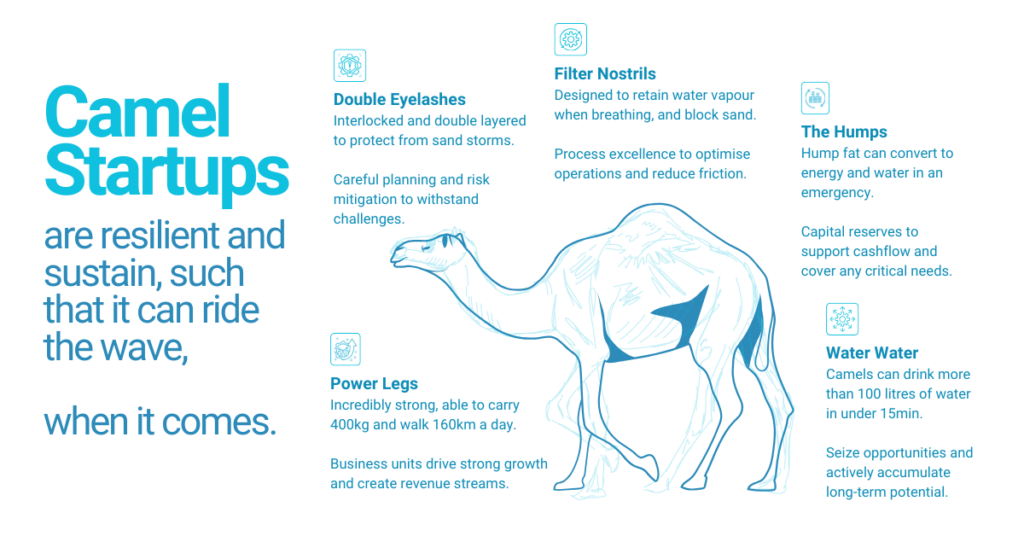
In the traditional venture capital hubs of Silicon Valley and London, the “Unicorn” has long been the gold standard. Unicorns are defined by their $1 billion valuations and their scaling approach of burning through massive amounts of cash to capture market share at any cost. However, in the volatile environments of emerging markets, the Unicorn model often proves fragile.
Startups are increasingly designed like camels, not unicorns. Camels are resilient, resourceful, and built for endurance. They are capable of overcoming the toughest conditions. Like camels traversing harsh deserts, these companies are built to survive uncertainty, adapt to challenging markets, and thrive over the long term. Halal venture capital empowers these “camel startups” to scale their vision while staying aligned with values that matter.
The “Unicorn vs. Camel” Comparison
| Feature | Unicorn | Camel |
| Primary Goal | Hyper-growth | Sustainability / Resilience |
| Growth Strategy | Blitzscaling (Burn to Scale) | Sustainable Pacing (Profit First) |
| Governance | Subjective ESG Standards | Rule-based Shariah Clarity |
| Market Focus | Saturated Western Markets | $3T Emerging Market Frontier |
For global investors seeking scalable opportunities that combine sustainable growth and ethical impact, halal venture capital represents one of the most underexplored and high-potential frontiers in today’s investment landscape.
The Halal Economy: A $3 Trillion Market in Emerging Economies

The halal economy is often misunderstood by those outside the ecosystem. It is not limited to halal food certification or traditional Islamic banking. In reality, it represents a comprehensive economic framework rooted in fairness, transparency, real-asset value, and shared prosperity.
Today, this ecosystem spans a diverse range of high-growth industries:
● Digital Finance and Fintech: Beyond banking, this includes Shariah-compliant micro-lending, alternative investments in SMEs and startups, wealth management and personal finance, ethical insurance (Takaful), and Web3 solutions.
● Healthcare and Medical Technology: Ensuring that pharmaceuticals and medical treatments meet ethical standards while expanding access to life-saving tech in underserved regions.
● Supply Chain and Logistics: Utilizing IoT and AI to ensure “Halal Integrity” from farm to fork, reducing waste and increasing transparency for the world’s 2 billion Muslim consumers.
● Modest Fashion and Consumer Brands: A multi-billion dollar sector that focuses on dignity, ethical manufacturing, and sustainable materials.
● Media, Education, and Content: Digital platforms that offer values-aligned learning and entertainment for the world’s youngest, fastest-growing demographic.
Collectively, the global halal economy is valued at over $3 trillion and continues to grow at an annual rate exceeding 7%. Much of this growth is driven by emerging markets, where populations are young, digitally connected, and increasingly entrepreneurial.
Despite this momentum, innovation in the halal economy remains undercapitalized. Many founders struggle to access funding that understands both their commercial ambition and their ethical boundaries. This is precisely where halal venture capital plays a defining role.
Join the Movement: Invest in Resilience

Are you an angel investor seeking to diversify into high-growth emerging markets without compromising on ethical integrity?
At HASAN.VC, we bridge the gap between faith-inspired entrepreneurship and global investment standards. Join our network of angel investors to gain early access to “Camel Startups” that are built to endure, scale, and deliver real-world impact.
Explore Investment Opportunities at HASAN.VC
What Halal Venture Capital Really Is and How It Differs
Halal venture capital refers to equity-based startup investment structures that comply with Shariah principles while following globally recognized venture capital best practices. While the term “Islamic venture capital” remains common in industry discourse, many founders and investors prefer “Halal VC” because it is clearer, more practical, and easier to communicate to a global audience.
At its core, halal venture capital avoids:
- Interest-based financing (Riba): Removing the burden of debt that can crush early-stage startups.
- Excessive speculation (Gharar): Ensuring that investments are based on real value and transparent contracts.
- Harmful or unethical business models: Avoiding industries such as gambling, tobacco, or exploitative lending.
It emphasizes fairness and risk-sharing through equity, focusing on real economic activity and long-term value creation. This structure aligns naturally with venture investing, which already favors patience and founder alignment over short-term financial engineering.
Why “Ethical VC” Lacks Clarity Compared to Halal VC

The rise of ethical and ESG-focused investing reflects a positive shift in global capital markets. However, “ethical” venture capital suffers from one critical weakness: ambiguity. What qualifies as “ethical” can vary widely depending on cultural norms, political context, or corporate branding. ESG criteria are frequently self-reported, inconsistently enforced, and open to interpretation.
Halal venture capital operates within a clear, rule-based framework. Shariah compliance is binary, where a business either meets the criteria or it does not. This clarity reduces reputational risk, strengthens governance, and builds trust between founders and capital partners. For serious investors, this precision is not restrictive; it is risk-reducing.
Strategic Capital as a Driver of Sustainable Development

Conventional financial institutions may view early-stage startups in emerging markets as volatile and difficult to exit. Venture capital, by contrast, is designed for exactly these conditions. It specializes in identifying scalable models and supporting founders through uncertainty.
At HASAN.VC, halal venture capital is positioned as a bridge that connects faith-inspired entrepreneurship with global investors seeking impactful and sustainable ventures to support. This approach rests on three core commitments:
● Principled Capital Allocation: Capital is deployed only into ventures demonstrating transparency, fairness, and responsible operations.
● Inclusive Innovation Support: Founders across Muslim-majority regions gain access to capital, mentorship, and strategic networks.
● Scaling Real-World Impact: Investments prioritize businesses that improve quality of life, not merely based on financial statements.
The Broader Socioeconomic Impact

Venture capital does not merely fund startups it shapes ecosystems that create the future. By channeling capital into halal economy startups, investors help generate:
● Employment opportunities across technology, logistics, and manufacturing.
● Knowledge transfer through mentorship and governance support.
● Women’s economic participation, especially in underserved markets where tech provides a platform for entrepreneurship.
● Financial inclusion for populations historically excluded from formal banking through Shariah-compliant fintech.
● Technology sovereignty for developing nations, reducing dependence on foreign tech giants
Frequently Asked Questions About Halal Venture Capital

1. What is halal venture capital?
It is equity-based startup investment that complies with Shariah principles. It focuses on sustainable value creation, avoiding debt and business practices that bring good to humanity and the world.
2. How is it different from Islamic venture capital?
The terms are often used interchangeably, but “halal venture capital” is a more practical, founder-centric term used to communicate the framework’s values to a global, secular market. It has a more ‘industry’ connotation instead of a religious one.
3. Who can invest in halal venture capital funds?
Both Muslim and non-Muslim investors can participate. In fact, many non-Muslim angel investors are drawn to Halal VC because of its moral grounding, focus on real-asset value and reduced speculation.
4. Does halal venture capital oppose high valuations?
No. It welcomes high valuations provided they are driven by real growth and sustainable revenue, rather than “growth at any cost” mindset that may lead to unfair business practices and speculative market bubbles.
5. Why is it important for emerging markets?
It provides growth funding in regions where conventional funding may be limited by high interest rates or a lack of ethical alignment. It ensures that innovation respects the values of the local population.
The Future of Halal Venture Capital
Halal venture capital is steadily moving beyond niche status. As more funds adopt Shariah-compliant frameworks, this approach is emerging as a credible model for sustainable, inclusive growth.
For emerging economies, the implications extend beyond finance; it is about building globally competitive companies without sacrificing ethical integrity.
Investing in Growth That Lasts

Venture capital can shape not just markets but entire societies. Guided by clear principles, it elevates emerging economies from innovation consumers to global value creators. In this landscape, the “Camel” startup is the new standard – resilient, resourceful, and built to endure volatility.
Halal venture capital provides the steady support that helps these ventures grow responsibly, stay true to their principles, and create lasting impact for both communities and investors.
Ready to back the next generation of resilient founders? Visit HASAN.VC to learn more about our mission and our portfolio.
Stay ahead of the queue by joining our mailing list for latest updates on events and investment opportunities.