Raising funds is one of the biggest milestones in a startup’s journey. It can also be one of the most challenging, especially if you are building a halal startup that wants to grow ethically and in line with Islamic values.
Many Muslim founders today are launching incredible ventures, from halal food brands and fintech apps to sustainable fashion and clean energy startups. Yet when it comes to raising capital, they often face the same question:
“How can I attract investors and still stay true to my faith?”
The good news is that you absolutely can. The key is understanding how to raise funds the right way, both strategically and Islamically.
This guide walks you step by step through how to raise money for your halal startup while blending modern fundraising methods with Islamic finance principles.
Step 1: Build a Strong, Ethical Foundation
Before you pitch investors, make sure your business model, products, and practices are halal and ethical.

This means:
- Avoiding haram sectors like alcohol, gambling, conventional interest-based finance, and adult entertainment.
- Ensuring transparency in how you generate profit, without deception, excessive speculation, or unfair contracts.
- Prioritizing real economic activity instead of financial engineering.
- Structuring investments in accordance with Shariah principles, with fair, participatory terms that create a true partnership between founders and investors
For deeper insights into the halal investment ecosystem, read How Venture Capital Can Drive Innovation in Islamic Finance.
Starting with integrity does more than attract values-aligned investors. It builds long-term trust with customers, partners, and your team.
Step 2: Understand What Type of Funding You Need
Not all capital is the same. Depending on your stage and goals, you may choose different funding paths.

A. Bootstrapping
Use your own savings or early sales revenue to finance growth without external investors.
Why it matters for halal founders: Bootstrapping gives you complete independence from third party capital providers. It allows you to avoid any riba-based loans (like personal credit cards) and full control to keep your business Shariah-compliant.
Pros:
✅ Complete ownership and control
✅ No equity dilution or investor pressure
✅ Forces disciplined spending and early validation
✅ Zero riba concerns
Cons:
❌ Limited by personal financial capacity
❌ Slower growth compared to funded competitors
❌ High personal financial risk
Shariah note: Bootstrapping is inherently halal as you’re using your own permissible wealth. Just ensure your business operations and revenue sources remain Shariah-compliant.
B. Seedstrapping -HASAN.VC’s Recommended Approach
Raise a small pre-seed or seed round from angels or early-stage VCs, then grow your startup to healthy cash flow and a solid customer base before considering additional funding.
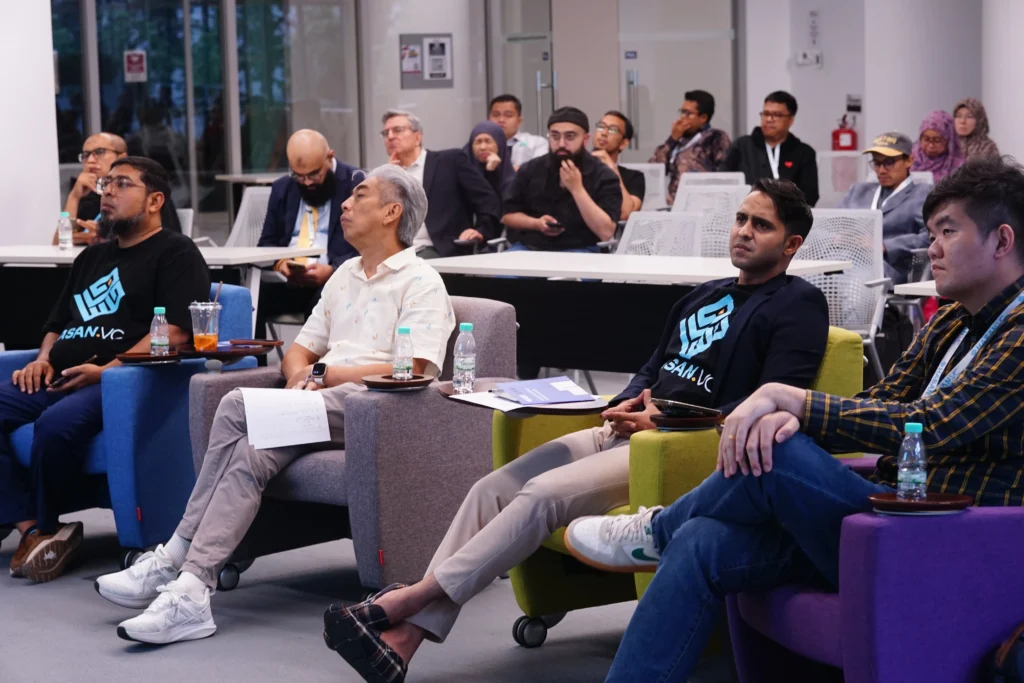
Why this is ideal for halal startups: Seedstrapping balances external support with founder control. It validates your business with some dilution while giving you a runway to build sustainably. This approach aligns with Islamic finance principles of equity-based investment and shared risk. The AI revolution has made this more viable. Where what once cost $500K can now be built for $50K.
Our VC fund invests $60K to $200k in pre-seed and seed stage startups who graduate from our virtual accelerator program. HASAN.VC looks for Camel Startups. Startups that build lean and strong teams and are capital efficient, able to generate healthy revenue within its first year.
Pros:
✅ Validates business model with real investor backing
✅ Maintains significant founder ownership
✅ Builds sustainable unit economics early
✅ Equity structure aligns with Islamic finance (Musharakah principle)
Cons:
❌ Requires discipline to not over-raise later
❌ May grow slower than heavily-funded competitors
❌ Need to balance investor expectations with sustainable growth
Shariah note: Structure seed investments as equity partnerships (Musharakah) where both parties share profit and risk. Here, investors become direct equity shareholders. Be careful of instruments that may lead to debt, including some versions of SAFE notes and convertible notes especially with interest-bearing terms. Document clearly that operations will remain halal. Engage shariah advisors that are friendly to startups in their pricing.
C. Family and Friends
Raise small amounts from your personal network—family members, close friends, or community members who believe in you.

Why it matters for halal founders: Your family and community often share your values, making them natural supporters who understand your Shariah commitments. However, mixing personal relationships with business requires open communication with clear agreements.
Pros:
✅ Often more flexible terms than formal investors
✅ Values-aligned supporters who understand your mission
✅ Can be structured simply and quickly
✅ Builds community ownership
Cons:
❌ Can strain relationships if business struggles
❌ May lack strategic guidance professional investors provide
❌ Limited funding amounts
❌ Potential mismatch of expectations
Shariah note: Structure using Mudarabah (profit-sharing) or Musharakah (partnership). Put everything in writing, the investment amount, ownership percentage or profit-sharing ratio, decision-making rights, and exit provisions. Avoid “loans with expected returns” as this can slip into riba territory.
D. Angel Investors
High-net-worth individuals who invest their personal wealth in early-stage startups in exchange for equity, often bringing hands-on mentorship.

Why values alignment matters: The right angel investor brings more than capital. They bring support for your mission, relevant expertise, and networks. For halal startups, finding angels who understand your values means you can ensure no compromise on Shariah compliance.
Pros:
✅ Mentorship and strategic valuebeyond money
✅ Faster decision-making than institutional VCs
✅ Often more flexible terms
✅ Personal investment means genuine commitment
Cons:
❌ Limited capital compared to VC firms
❌ Individual angels have varying expertise levels
❌ Need to vet each angel for values alignment
❌ May lack institutional resources
Shariah note: Structure as direct equity purchases. Avoid convertible notes with interest or debt instruments . Ask potential angels: Do you understand our halal commitment? Are you comfortable with our restrictions? How do you structure investments?
E. Venture Capital (VC)
Professional investment firms managing funds, investing over all stages from Seed to late stage.

How Islamic finance can align with VC: Venture capital can be based on equity-based structures (no interest-based debt), embraces risk-sharing between investor and entrepreneur (Musharakah), and focuses on long-term partnership. When VCs invest in this way, they share your journey-profits when you succeed, losses when you don’t.
Pros:
✅ Significant capital for aggressive scaling
✅ Strategic expertise and extensive networks
✅ Credibility for future fundraising
✅ Strategic and corporate support through board seats
✅ Equity partnership aligns with Shariah principles
Cons:
❌ Significant equity dilution
❌ Board seats mean shared decision-making
❌ Pressure for rapid growth and defined exit timeline
❌ Complex term sheets requiring legal and shariah expertise
❌ Not all VCs understand or appreciate halal constraints
Shariah note: The cleanest structure is a direct equity investment ie a Musharakah. Any agreement that creates a debt relationship is a Shariah risk, as there can be no benefit given for debt. You will need legal and Shariah advice or support, to look into technical aspects of your agreement, especially for SAFE notes, liquidity preferences, capital guarantees, interest or coupons, or other terms related to preference shares, and maintain control over Shariah compliance. Avoid VCs who don’t respect your halal boundaries or have portfolios heavily in haram industries. Have term sheets reviewed by advisors knowledgeable in both venture law and Islamic finance.
HASAN.VC: As a halal VC fund, we back startups who comply with Halal principles. Our portfolio proves you don’t sacrifice ethics for scale.
Step 3: Structure Your Funding in a Halal Way
In Islamic finance, how you raise money matters as much as why. Avoid debt and ensure that financial relationships are based on fairness, shared risk, and real value.

Common Shariah-compliant structures include:
Mudarabah (Profit-Sharing Partnership)
The investor provides capital and the entrepreneur provides expertise. Profits are shared according to an agreed ratio. Losses are borne by the investor unless negligence occurs.
Musharakah (Joint Venture Partnership)
Both parties contribute capital and share profits and losses proportionally. This suits long-term or co-investment arrangements.
Murabaha (Cost-Plus Sale)
Used for purchasing assets or inventory, sometimes structured to be short-term. Investors buy the item and sell it to you at a marked-up price, payable over time. Not many global options are available for such financing, although some countries have crowd-investing or P2P lending platforms that serve startups.
Wakalah (Agency Agreement)
You act as an agent managing investor funds for a specific purpose.
These structures are technical, and require professional advice. At HASAN.VC we work with our Shariah advisory firm Adl Advisory to design deals that are fair to founders and investors while maintaining Shariah-compliance.
Step 4: Prepare a Clear and Honest Pitch
Your pitch deck is the key document that tells investors who you are, what you are building, and why they should support you.

A strong and halal-aligned pitch includes:
- Mission and Values
Show that your startup is purposeful and aligned with Islamic ethics. - Problem and Solution
Explain the challenge you are solving and how your product addresses it better than others. - Market Opportunity
Demonstrate the market size and your understanding of your audience. - Business Model
Explain how you make money in a halal and transparent way. - Traction and Validation
Highlight customers, partnerships, and early revenue. - Team
Show who is behind the startup and why investors can trust them. - Financial Projections and Funding Needs
State how much you need, how you will use it, and what investors receive in return.
Integrity always sells. Being honest about your challenges builds far more confidence than exaggerating your numbers. Our five weeks Accelerator program equips founders with mentors who help them build a compelling pitch deck for their fundraising journey.
Step 5: Find the Right Investors
Not every investor will understand your halal approach, and that is fine. Your goal is to find those who appreciate your values.
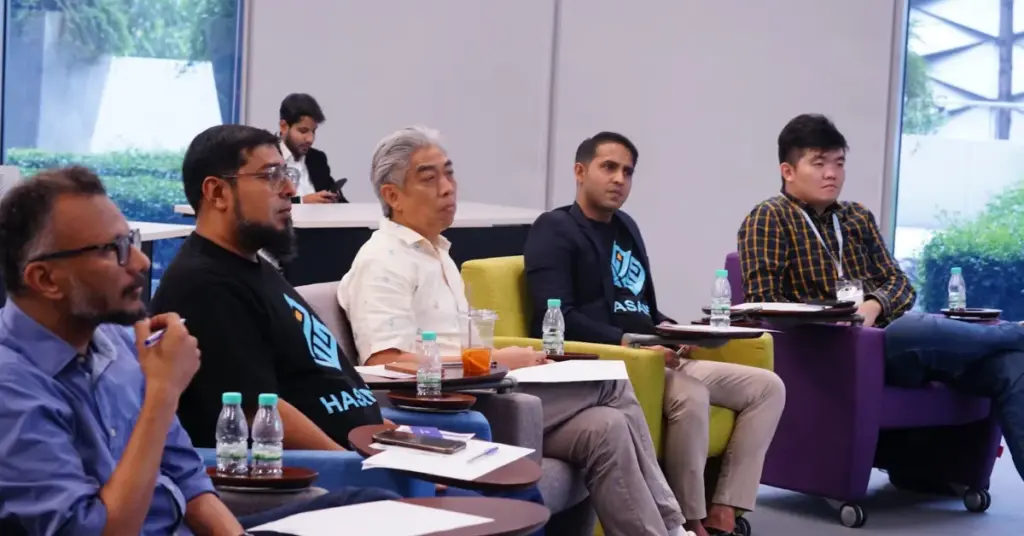
Start by exploring networks focused on ethical, faith-based, or impact investing:
- Islamic venture funds like us at HASAN.VC
- Family offices
- Angel networks and groups
- Islamic crowdfunding and fintech platforms
- Development or CSR funds and competitions supporting the halal economy and social impact
Be transparent about your Shariah principles. Many non-Muslim investors appreciate ethical frameworks, especially when they reduce risk and promote long-term sustainability.
Step 6: Negotiate Fair and Transparent Terms
When investors show interest, the next step is agreeing on terms. Shariah compliance must be maintained carefully.

Avoid terms that:
- Guarantee capital, fixed returns or interest
- Transfer risks unfairly to one party
- Create ambiguity about ownership or profit distribution
Focus on clarity, shared accountability, and fairness.
If needed, seek legal and Shariah guidance from halal-compliant service providers like those listed in the HASAN.VC Verified Services Marketplace.
Step 7: Build Relationships, Not Just Transactions
Fundraising does not end when the money arrives. Investors become part of your long-term success.

Provide transparent updates, communicate challenges honestly, and ask for advice.
Relationships are often more valuable than capital itself.
If you want to join a supportive ecosystem, you can apply to HASAN.VC’s accelerator or venture studio programs as a startup when applications open.
Step 8: Stay True to Your Values as You Grow
Growth brings new opportunities, but also new temptations. As your business scales, staying halal becomes even more important.

Develop governance systems that ensure ongoing Shariah compliance, such as:
- Ethical procurement policies
- Avoiding interest-based financing
- Regular Shariah audits or review
- Structured ethical operations
Your values are part of your brand. In a world where transparency is increasingly demanded, being authentically halal is a unique strength. Beyond compliance, uphold high levels of accountability and excellence, and spread a culture and mission that creates huge value and brings great benefit to society.
Final Thoughts: Raising Capital the Right Way
Raising funds for a halal startup is not about limiting your options. It is about redefining the path to success. World-class businesses can be built without compromising your beliefs.
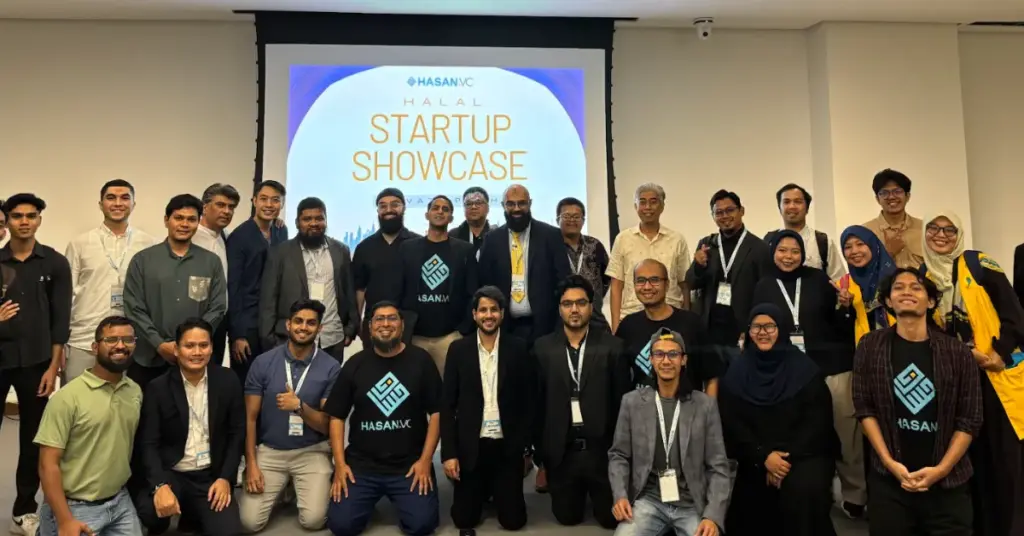
When you build ethically, structure transparently, and partner wisely, you attract investors who share your vision and elevate your impact.
At HASAN.VC, we see it often. Founders who remain true to their principles build not only sustainable companies, but also movements that inspire trust across borders.
Halal entrepreneurship is not just business. It is barakah in motion, where faith, purpose, and innovation come together to create real value for the world.
Stay ahead of the queue by joining our mailing list for latest updates on events and investment opportunities.