Ibrahim Alkurd expects a halal Netflix and a halal Spotify to exist. He also expects a crowd of competing versions. That tension sits at the center of the case for why right now is the best moment to build in the Muslim startup economy. The opportunity is big and the competition is thin, but he doesn’t think either will stay that way for too long.
Ibrahim is an investor and entrepreneur who went from medicine into crypto and now builds and backs companies across tech, AI and the Muslim market. He made the argument on Episode 2 of Camels vs Unicorns (watch the moment at 40:43). Here’s what he said, and what the data says about it.
Why is now the best time to build in the Muslim startup economy?
Now is the most strategic time to build in the Muslim startup economy because the ecosystem is transitioning from its experimental first phase into a mature, highly capitalized “second wave.”
Founders today operate in a de-risked environment where demand is proven, but the standards for winning have evolved.
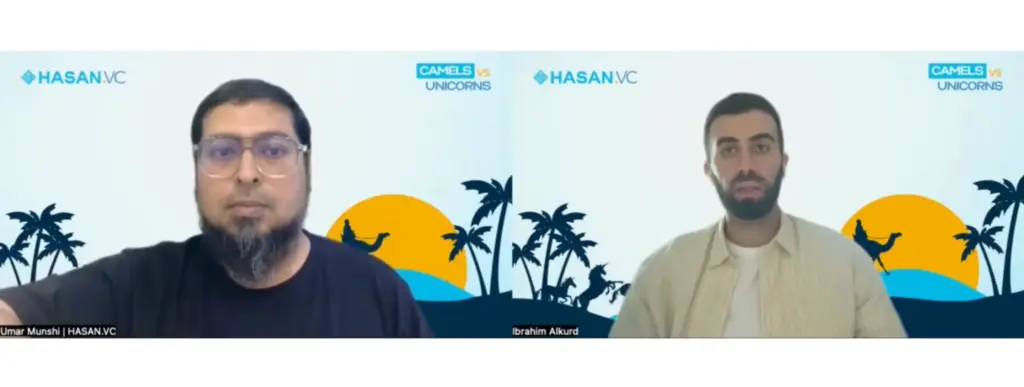
By “Muslim startup economy,” Ibrahim means companies building for Muslim customers, with Quran apps as his go-to example. His argument fits in one line:
“The competition is not massive yet, but the opportunity is massive.”
The customer base backs him up. Pew Research counts about 2.0 billion Muslims, 25.6% of the world, up 347 million between 2010 and 2020, which made Islam the fastest-growing major religion of that decade. They also spend: Muslim consumers spent $2.60 trillion across halal-economy consumer sectors in 2024, projected to reach $3.56 trillion by 2029. Those figures cover food, travel, fashion and similar sectors rather than startups specifically, but they show how big the audience and the market is.
Where are the customers, and why do emerging economies matter?
Mostly in Asia’s emerging economies, and founders are building for where those economies will be in 10 to 20 years, not where they are today. Indonesia, Pakistan, India and Bangladesh have massive, fast-growing markets and their purchasing power are expected to grow massively.
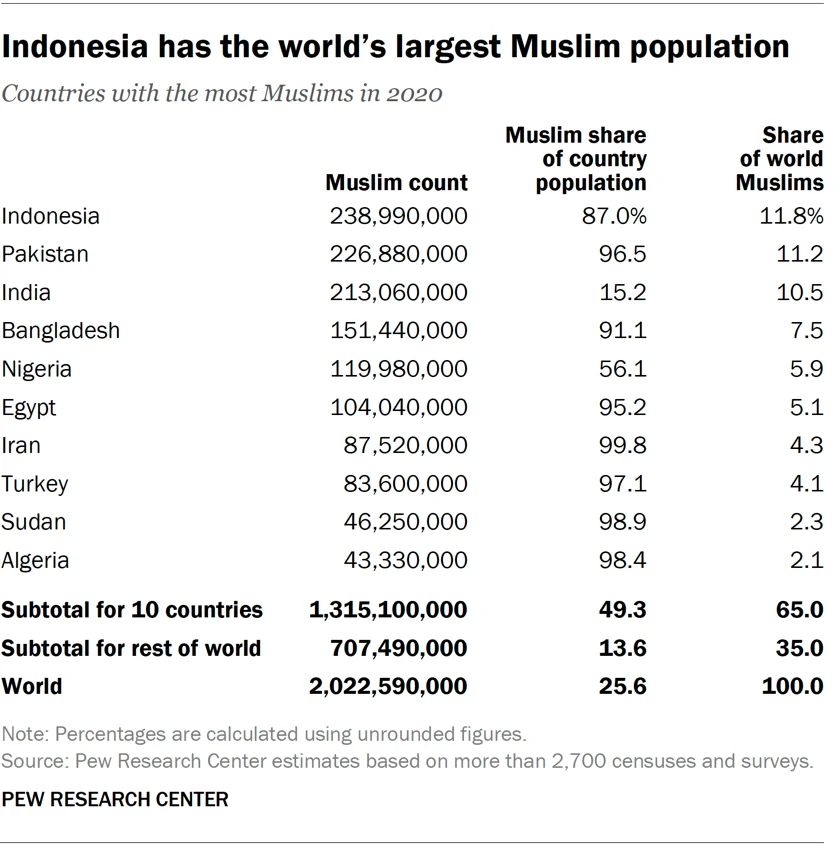
Together that’s about 830 million people, and the top three each hold roughly 11–12% of the world’s Muslims. The growth he’s betting on has outside support, too.
Goldman Sachs expected emerging markets to grow 3.8% against 1.8% for developed markets through the end of this decade, and projected Indonesia as the world’s fourth-largest economy by 2050. It also put Pakistan sixth by 2075, assuming the right policies and institutions are in place. Those are long-range projections, not promises. One more number fits his build-for-the-future logic: the global median age of Muslims is 24, versus 33 for non-Muslims.
Will there really be a halal Netflix and a halal Spotify?
Ibrahim thinks so, and he thinks it will get crowded. It’s all about timing: early movers enjoyed the luxury of capturing a massive, starved market with little effort, but a second wave of highly specialized competitors are already here. To win today, founders can no longer rely on simply being “the halal option”, they must build superior engineering, secure stronger distribution, and prove who the best executor is.
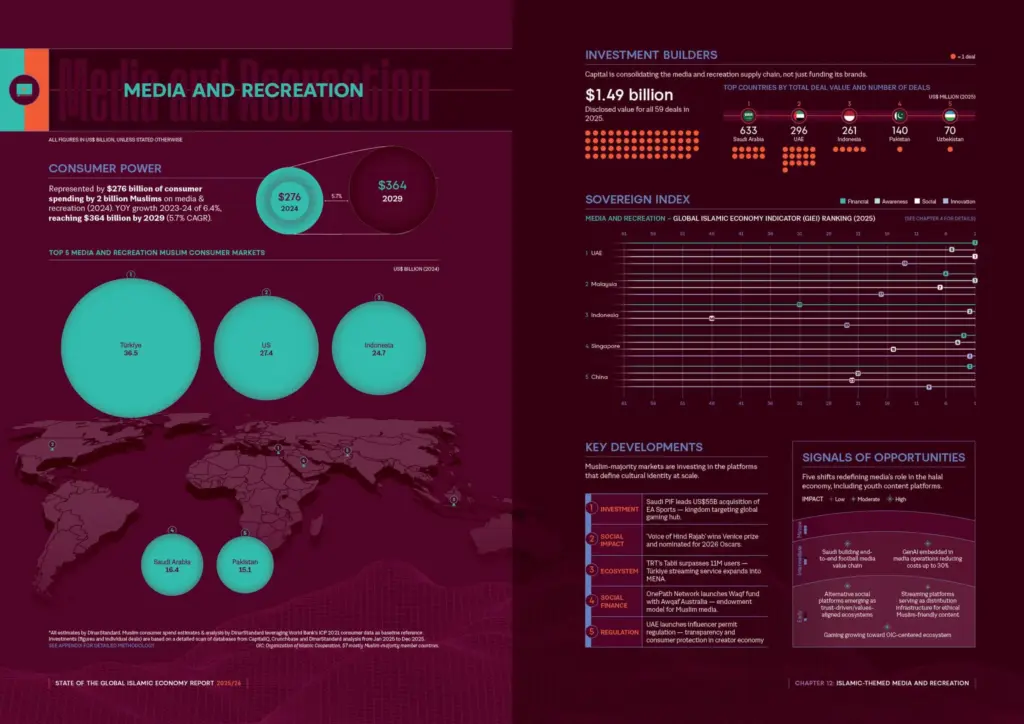
The money points the same way. Muslim consumers spent $276 billion on media and recreation in 2024, projected to reach $364 billion by 2029, with Türkiye, the United States and Indonesia the largest markets. Investors are noticing: the State of the Global Islamic Economy report counted 225 deals worth $5.8 billion in 2023/24, then 346 transactions worth about $13.11 billion in 2024/25. Those totals include M&A and private equity, not only startup rounds, but the direction is clear.
Early movers have also scaled: Muslim Pro, launched in 2010, says it has passed 190 million downloads. They paved the way alongside other notable pioneers like Alchemiya (streaming to subscribers in over 40 countries since 2015), Durioo+ (a Y Combinator-backed Islamic children’s streaming platform with over a million downloads), and Chaptrs (an exclusively human-narrated Islamic audiobook app that has already crossed over a million users).
Do you need a tech background or a big budget to build one?
No. Ibrahim’s own path is the argument. He studied medicine, says almost nothing from med school helped him directly in finance and tech (professionalism was the exception), and built in both anyway.
“Don’t underestimate your ability to build a startup.”
His method is to start with a pain point from your own life. A Quran teacher can’t be available around the clock, but an app can. And if it solves a real need, he says, people will pay for it.

The Quran-app category shows how that plays out. Tarteel says 15 million+ Muslims use its app, and Qara’a, a Quran-learning app in HASAN.VC’s portfolio, has reached over a million downloads by building around the same kind of need: learning to recite without a teacher on call. Useful first, revenue follows is also the logic behind HASAN.VC’s Camel Manifesto.
The bottom line
Ibrahim’s case holds up on the numbers: a customer base of about 2 billion people, a consumer market heading toward $3.56 trillion, and investment activity that more than doubled in a year. What the data can’t tell you is which company wins yet, and the field will get crowded. The advantage goes to whoever starts while it’s still early and builds something people actually need.
He covers a lot more in the full conversation: how he got into crypto and why he asks a mufti to explain Bitcoin before taking a fatwa, how Muslim startups can exit, and what he looks for in a founder beyond the pitch. Watch the full episode of Camels vs Unicorns below.
Camels vs Unicorns is hosted by Umar Munshi, General Partner at HASAN.VC. The show features conversations with founders and investors building profitable, values-driven businesses across fintech, AI, and impact investing, proving that sustainable growth is the way forward. Subscribe on YouTube to catch every episode.
Stay ahead of the queue by joining our mailing list for latest updates on events and investment opportunities.